
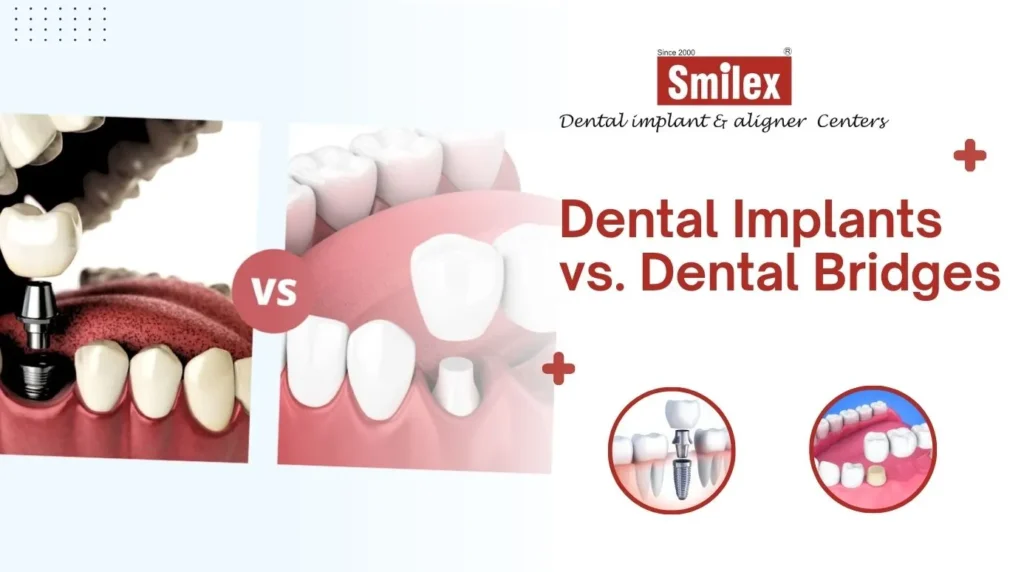
Missing teeth can affect more than just your smile; they can make everyday activities like chewing and speaking uncomfortable, and may even lead to shifting of surrounding teeth over time. Whether caused by decay, injury, or gum disease, tooth loss is a common dental concern that requires timely and effective treatment.Fortunately, modern dentistry offers reliable solutions to restore both function and appearance. Two of the most widely recommended options are dental bridges and dental implants. While both aim to replace missing teeth, they differ significantly in terms of procedure, structure, and long-term benefits.Choosing the right option is important because it directly impacts your oral health, comfort, and overall investment. Factors such as cost, durability, maintenance, and treatment time all play a crucial role in deciding whether a dental bridge or implant is the better choice for you.
What is a Dental Bridge?
A dental bridge is a fixed dental restoration used to replace one or more missing teeth by “bridging” the gap between healthy teeth. It is made up of artificial teeth (pontics) that are held in place by the nearby natural teeth or dental crowns. The primary purpose of a dental bridge is to restore your ability to chew, maintain facial structure, and improve the appearance of your smile.
Types of Dental Bridges
There are several types of dental bridges, each suited for different dental conditions:
- Traditional Dental Bridge
This is the most common type. It involves placing crowns on the teeth adjacent to the gap, with a false tooth in between. It is ideal when you have healthy teeth on both sides of the missing tooth. - Cantilever Bridge
Used when there is just one adjacent tooth to support the bridge. While effective in certain cases, it is less commonly recommended due to uneven pressure on a single tooth. - Maryland Bridge (Resin-Bonded Bridge)
Instead of crowns, a metal or porcelain framework is connected to the backs of adjacent teeth. It is a more conservative option as it requires minimal alteration of nearby teeth.
How the Dental Bridge Procedure Works
The dental bridge procedure typically involves the following steps:
- Tooth Preparation
The adjacent teeth (abutment teeth) are reshaped to accommodate dental crowns. - Impression & Design
An impression of your teeth is taken to create a custom-fit bridge that matches your natural teeth. - Temporary Bridge Placement
A temporary bridge may be placed to protect the exposed teeth while the permanent one is being made. - Final Placement
Once ready, the permanent bridge is cemented into place, restoring both function and appearance.
What is a Dental Implant?
A dental implant in prabhat road, erandwane, pune is a permanent tooth replacement treatment that is meant to look and operate like a natural tooth. It is surgically placed into the jawbone and acts as a strong foundation for an artificial tooth. Dental implants are widely considered one of the most advanced and long-lasting options for replacing missing teeth.
A dental implant has three basic components:
A dental implant has three basic components:
- Implant (Titanium Post)
This is the screw-like structure that is placed into the jawbone. It acts as an artificial tooth root and provides a stable base. - Abutment
This is a connector placed on top of the implant. It holds and supports the final crown. - Crown (Artificial Tooth)
It is designed specifically to match the color and contour of your existing teeth.
How Dental Implants Work
Dental implants work through a natural process called osseointegration, where the titanium implant fuses with the jawbone over time. This creates a strong and durable foundation, similar to a natural tooth root. Because of this integration, implants offer excellent stability, prevent bone loss, and do not rely on neighboring teeth for support.
Procedure Overview
The dental implant procedure is typically completed in multiple stages:
- Initial Consultation & Planning
The dentist evaluates your oral health, bone density, and suitability for implants. - Implant Placement Surgery
The titanium implant is surgically implanted into the jawbone while under local anesthetic. - Healing Period (Osseointegration)
Over a few months, the implant fuses with the bone to ensure stability. - Abutment Placement
The abutment is affixed to the implant when healing is finished. - Crown Placement
A custom-made crown is fixed on top, completing the restoration.
Dental Bridge vs Implant: Key Differences
Choosing between a dental bridge and a dental implant depends on several important factors. While both options restore missing teeth, they differ in structure, longevity, and long-term impact on your oral health.
Structure and Placement
A dental bridge relies on adjacent natural teeth for support. These teeth are reshaped and fitted with crowns to hold the artificial tooth in place.
In contrast, a dental implant is surgically placed into the jawbone, acting as an independent artificial root that does not depend on neighboring teeth.
Longevity and Durability
Dental implants are known for their long-term durability and can last many years, often decades, with proper care.
Dental bridges, while effective, generally have a shorter lifespan and may need replacement after several years due to wear or damage.
Impact on Surrounding Teeth
A dental bridge requires modification of adjacent healthy teeth, which can weaken them over time.
Dental implants do not affect nearby teeth, as they are placed directly into the bone and function independently.
Bone Preservation
One of the biggest advantages of dental implants is their ability to preserve jawbone health. They stimulate the bone just like natural tooth roots, preventing bone loss.
Dental bridges do not provide this benefit, and over time, the bone beneath the missing tooth may gradually deteriorate.
Aesthetics and Feel
Dental implants closely resemble natural teeth in both appearance and function. They feel more stable and comfortable while chewing or speaking.
Dental bridges also improve appearance but may not feel as natural as implants, especially over time
Pros and Cons of Dental Bridges
Dental bridges are a popular and effective solution for replacing missing teeth, especially for patients looking for a quicker and more affordable option. However, like any dental treatment, they come with their own set of benefits and limitations.
Advantages of Dental Bridges
- Lower Upfront Cost
Dental bridges are generally more affordable than implants, making them a suitable choice for patients with budget constraints. - Faster Procedure
The entire process is usually completed within a few dental visits, allowing for quicker restoration compared to implants. - Non-Surgical Treatment
Unlike implants, dental bridges do not require surgery, making them less invasive and more comfortable for many patients.
Disadvantages of Dental Bridges
- Requires Adjacent Teeth Support
Healthy neighboring teeth must be reshaped to support the bridge, which can compromise their natural structure. - Shorter Lifespan
Dental bridges typically do not last as long as implants and may need replacement after several years. - May Affect Natural Teeth
Since the bridge depends on adjacent teeth, it can put extra pressure on them, potentially leading to future dental issues.
Cost Comparison: Dental Bridge vs Implant (India Focus)
Understanding the cost difference between a dental bridge and a dental implant is essential for making the right decision. While bridges are generally more affordable upfront, implants are often considered a long-term investment due to their durability and benefits.
Average Cost of Dental Bridge in India
Dental bridges are typically the more budget-friendly option.
- The average cost of a dental bridge in India ranges from ₹15,000 to ₹50,000 per tooth/unit
- Full bridges (multiple teeth) may cost ₹30,000 to ₹1,00,000 or more, depending on the number of teeth involved
This makes bridges a popular choice for patients looking for a quicker and more economical solution.
Average Cost of Dental Implant in India
Dental implants involve a higher initial cost but offer superior longevity and performance.
- The average cost of a single dental implant in India ranges from ₹20,000 to ₹60,000 per tooth
- A complete implant with crown can cost around ₹35,000 to ₹75,000
- Full-mouth implants may range from ₹2,50,000 to ₹8,00,000, depending on complexity
Although expensive initially, implants often last significantly longer, reducing future replacement costs.
Factors Affecting Cost (Materials, Clinic, Expertise)
Several factors influence the final cost of both dental bridges and implants:
- Material Used
High-quality materials like zirconia or porcelain increase the cost but improve aesthetics and durability. - Type of Treatment
Complex cases (multiple missing teeth, full-mouth restoration) naturally cost more. - Clinic Location & Infrastructure
Clinics in metro cities or advanced dental centers may charge higher due to better technology and facilities. - Dentist’s Expertise
Experienced specialists or implantologists may charge more, but they often provide better precision and long-term success. - Additional Procedures
Treatments like bone grafting, sinus lifts, or gum treatments can increase implant costs significantly
Dental Bridge vs Implant: Which is Better for You?
Choosing between a dental bridge and a dental implant is not a one-size-fits-all decision. The right option depends on your oral health condition, budget, and long-term expectations.
Based on Age and Oral Health
Younger patients with good oral hygiene and healthy gums are often better candidates for dental implants, as they can benefit from long-term durability.
On the other hand, dental bridges may be preferred for patients who want a quicker solution or may not be ideal candidates for surgery due to medical conditions.
Budget Considerations
If you are looking for a more affordable upfront option, a dental bridge is usually the better choice. It has a lower initial cost and requires fewer visits.
However, if you can invest more initially, a dental implant in Pune may be more cost-effective in the long run due to its longer lifespan and reduced need for replacement.
Bone Density and Jaw Health
Dental implants require sufficient jawbone density because they are placed directly into the bone. Patients with significant bone loss may need additional procedures like bone grafting.
Dental bridges, however, do not depend on bone support, making them suitable for patients with reduced bone density.
Long-Term vs Short-Term Solution
A dental implant is considered a long-term or even permanent solution with excellent stability and natural function.
A dental bridge is more of a short- to mid-term solution, offering effective results but typically requiring replacement after several years.
Procedure Time & Recovery Comparison
Understanding the time required for treatment and the recovery process is important when choosing between a dental bridge and a dental implant. Both options differ significantly in procedure duration, healing time, and aftercare needs.
Time Required for Each Treatment
Dental Bridge:
- Usually completed in 1–2 weeks
- Requires 2–3 dental visits
- Faster because it does not involve surgery
- Temporary bridge may be placed while final one is prepared
Dental Implant:
- Total process may take 3–6 months or longer
- Involves multiple stages (surgery, healing, crown placement)
- Time is mainly due to bone integration (osseointegration)
- Healing period is essential for long-term stability
Healing and Aftercare Differences
Dental Bridge Aftercare:
- Mild adjustment period after placement
- No surgical healing required
- Requires careful cleaning around bridge area
- Flossing equipment or water flossers are commonly advised.
- Regular dental checkups to maintain supporting teeth
Dental Implant Aftercare:
- Initial recovery from minor surgery takes a few days to a week
- Full healing of bone and gum takes several months
- Good oral hygiene is critical to prevent infection
- Avoid hard foods during early healing phase
- Long-term care is similar to natural teeth
Maintenance & Aftercare
Proper maintenance plays a major role in the success and longevity of both dental bridges and dental implants. While both require good oral hygiene, the cleaning methods and long-term care approach differ slightly.
Cleaning Dental Bridges
Dental bridges require extra attention because food particles can easily get trapped underneath the artificial tooth (pontic).
- Brush twice daily using a soft-bristled toothbrush
- Use interdental brushes or floss threaders to clean under the bridge
- Consider a water flosser for better plaque removal
- Avoid sticky and hard foods that may strain the bridge
- Regular dental cleanings are important to prevent decay in supporting teeth
Caring for Dental Implants
Dental implants are easier to maintain because they function like natural teeth, but they still require consistent care.
- Brush at least twice a day with a soft toothbrush
- Floss daily around the implant area
- Use non-abrasive toothpaste to avoid damaging the crown surface
- Attend routine dental check-ups to monitor gum health
- Avoid smoking, as it can affect implant success and healing
Long-Term Oral Hygiene Tips
Good oral hygiene habits are essential for both bridges and implants:
- Maintain a consistent brushing and flossing routine
- Visit your dentist every 6 months for professional cleaning
- Limit sugary foods and drinks to reduce plaque buildup
- Stay hydrated to support overall oral health
- Address any discomfort or changes early to prevent complications
Frequently Asked Questions (FAQs)
1.Is a dental implant a better choice than a bridge?
A dental implant is generally considered better for long-term results because it is more durable, preserves jawbone health, and does not affect adjacent teeth. However, a dental bridge may be preferred if you want a faster, less expensive, and non-surgical solution.
2.How long does a bridge last vs implant?
- Dental bridge: Typically lasts around 5 to 15 years, depending on care and oral hygiene.
- Dental implant: Can last 15 years to a lifetime with proper maintenance.
Implants usually have a longer lifespan because they are anchored directly into the jawbone.
3.Are implants painful?
Dental implant procedures are performed under local anesthesia, so you do not feel pain during surgery. Mild discomfort, swelling, or sensitivity may occur for a few days after the procedure, but it is usually manageable with prescribed medication and proper aftercare.
4.Can anyone get dental implants?
Not everyone is an immediate candidate for implants. Ideal candidates should have:
- Good overall oral health
- Sufficient jawbone density
- Healthy gums
- No uncontrolled medical conditions (like severe diabetes or heavy smoking habits)
In some cases, additional procedures like bone grafting may make implants possible.
5.Which is more affordable in the long run?
Although dental bridges are cheaper initially, dental implants are often more cost-effective in the long run. This is because implants last longer, require fewer replacements, and help prevent bone loss, reducing future dental expenses.
Conclusion
Both dental bridges and dental implants are effective solutions for replacing missing teeth, but they differ in important ways. A dental bridge offers a quicker and more affordable treatment option, while a dental implant in prabhat road, erandwane, pune provides a long-lasting, stable, and bone-preserving solution. The key differences mainly come down to cost, procedure time, durability, and impact on surrounding teeth and jawbone health.If you are unsure which option is right for you, it is always best to consult a qualified dentist. A professional evaluation of your oral health, bone condition, and medical history will help determine the most suitable treatment.Ultimately, the choice between a dental bridge and an implant should be based on your individual needs, long-term goals, and budget, rather than a one-size-fits-all approach. Making an informed decision ensures better comfort, function, and confidence in your smile for years to come.
Smilex International Dental Centre is the best Dental clinic in Pune for Dental implants as well as dental bridges. Dr. Vijay Deshmukh is one of India’s leading implantologists and has successfully placed implants from 90- year-old patients to young adults. If you are looking to replace your missing teeth, book an appointment today and experience world class treatment as we restore your teeth and brighten your smiles.
Book your Invisalign consultation today:
Call +91 97654 07660
Find the clinic here: Get Direction
Address: 3rd Floor, Rahul Capital, Prabhat Road, Erandwane, Pune, Maharashtra 411004