
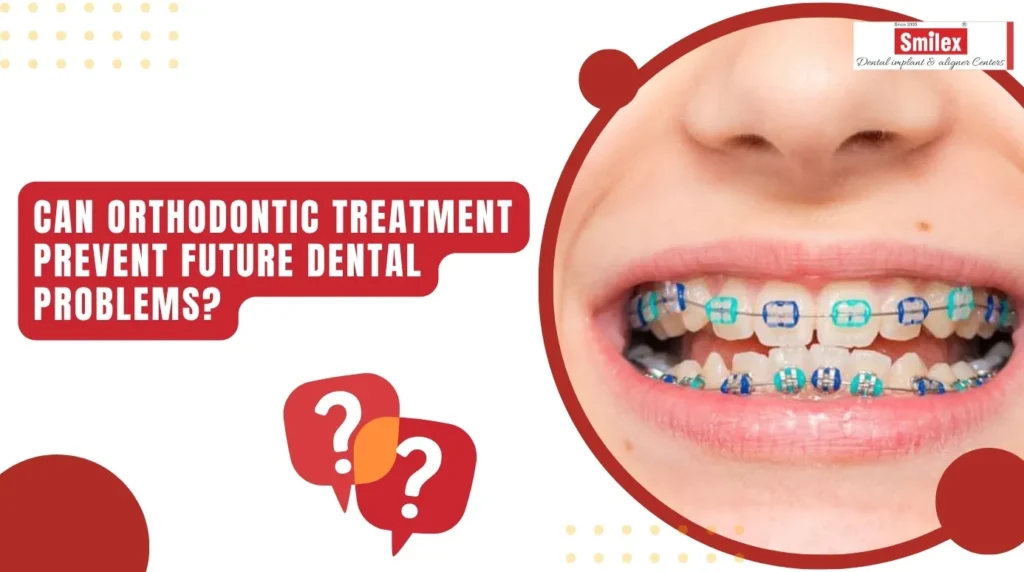
A straight, well-aligned smile is not only about appearance. Properly aligned teeth can make brushing and flossing easier, improve the way your teeth come together, and support better long-term oral hygiene. This is why orthodontic treatment can play an important role in preventing or reducing certain future dental problems.Crooked teeth, overcrowding, gaps, overbite, underbite, and crossbite can make it difficult to maintain ideal oral hygiene and may contribute to uneven tooth wear or excessive stress on certain teeth. Early assessment by an experienced orthodontist can help identify these concerns and determine whether treatment is appropriate.At Smilex Dental Implant & Aligner Centers, Dr. Sonali Deshmukh, M.D.S., Chief Orthodontist and Aligner Specialist, has extensive experience in orthodontic care. She has been practicing since 1998 and brings 25 years of clinical experience in orthodontics and aligner treatment.
Can Orthodontic Treatment Prevent Future Dental Problems?
Yes, orthodontic treatment can help reduce the risk of some future dental problems by improving tooth alignment, bite relationships, and access for daily cleaning. Straightening crowded or poorly positioned teeth may make brushing and flossing easier and can help distribute biting forces more evenly. However, orthodontic treatment cannot prevent every dental problem, so regular dental check-ups and good oral hygiene remain essential.
How Can Orthodontic Treatment Protect Your Future Oral Health?
1. Makes Brushing and Flossing Easier
Crowded and overlapping teeth can create areas that are difficult to clean. Food particles and plaque may accumulate between teeth, particularly where toothbrush bristles and floss have limited access.
With properly aligned teeth, daily brushing and flossing can become easier. This may support better plaque control and reduce the likelihood of problems associated with inadequate oral hygiene.
For people searching for orthodontic treatment in Pune, an orthodontic consultation can help determine whether tooth alignment is affecting their ability to maintain proper oral hygiene.
2. May Reduce the Risk of Tooth Decay
Tooth decay is caused by several factors, including plaque bacteria, dietary habits, fluoride exposure, and oral hygiene. Misaligned teeth do not directly cause cavities, but severe crowding can make cleaning more challenging.
By correcting significant crowding, orthodontic treatment may make certain tooth surfaces easier to access during brushing and flossing. This can support a more effective long-term oral hygiene routine.
It is important to remember that straight teeth do not automatically prevent cavities. Regular dental examinations, professional cleanings when recommended, fluoride use, and appropriate brushing and flossing are still necessary.
3. Supports Healthier Gums
Gum health depends heavily on controlling plaque around the teeth and gumline. When teeth overlap or are positioned irregularly, plaque can be harder to remove.
Braces and clear aligners can be used to improve tooth positioning when clinically appropriate. Better alignment may make oral hygiene more manageable and support healthier gums.
Patients considering braces treatment in Pune or clear aligners should receive a professional assessment before choosing a treatment option.
4. Helps Improve Bite Function
Your teeth should ideally work together when you bite and chew. Problems such as an overbite, underbite, crossbite, or open bite can affect the way teeth contact one another.
Appropriate orthodontic treatment can improve the relationship between the upper and lower teeth. Better bite coordination may help reduce abnormal contact and uneven pressure on individual teeth.
The exact treatment approach depends on factors such as age, jaw development, tooth position, bite severity, and overall oral health.
5. May Help Reduce Uneven Tooth Wear
When teeth do not meet properly, certain areas may receive more biting pressure than others. Over time, abnormal or excessive contact can contribute to tooth wear in some individuals.
Correcting problematic bite relationships may help distribute biting forces more appropriately. This is one reason an orthodontic evaluation can be valuable even when the main concern is not cosmetic.
6. Can Help Manage Dental Crowding
Dental crowding occurs when there is insufficient space for teeth to fit comfortably within the dental arch. Crowded teeth may overlap, rotate, or become difficult to clean.
Orthodontic treatment for crowded teeth can create a more organized tooth arrangement based on an individual\’s treatment needs. Depending on the case, treatment may involve traditional braces, ceramic braces, self-ligating braces, or clear aligner therapy.
7. May Support Better Long-Term Oral Hygiene
One of the biggest benefits of well-aligned teeth is practical: they can be easier to maintain.
When teeth are positioned appropriately, patients may find it simpler to brush along the gumline and clean between teeth. Better accessibility can make maintaining an effective oral hygiene routine easier over the long term.
However, maintaining the results after orthodontic treatment is equally important. Retainers after orthodontic treatment are commonly recommended because teeth can naturally shift over time.
Can Orthodontic Treatment Prevent All Dental Problems?
No. Orthodontic treatment is not a guarantee against future dental problems.
Even after achieving a well-aligned smile, you can still develop cavities, gum disease, enamel erosion, tooth sensitivity, or other oral health conditions. These problems can be influenced by diet, oral hygiene, genetics, lifestyle, medications, and other factors.
Therefore, orthodontic treatment should be considered one part of a complete oral healthcare routine.
For long-term dental health, continue:
- Brushing twice daily with fluoride toothpaste
- Cleaning between teeth regularly
- Limiting frequent sugary snacks and drinks
- Visiting your dentist for regular check-ups
- Following professional cleaning recommendations
- Wearing retainers as instructed after orthodontic treatment
- Addressing dental problems at an early stage
When Should You Consider Orthodontic Treatment?
You may benefit from an orthodontic consultation if you notice:
- Crowded or overlapping teeth
- Large spaces between teeth
- Difficulty cleaning certain areas
- Protruding teeth
- Overbite or underbite
- Crossbite
- Open bite
- Frequent cheek or lip biting
- Uneven tooth contact
- Difficulty chewing comfortably
- Teeth that are becoming increasingly difficult to clean
An orthodontist can evaluate your teeth, bite, jaw relationship, and overall oral condition before recommending treatment.
Braces or Clear Aligners: Which Is Better for Preventing Dental Problems?
Both braces and clear aligners can be effective for appropriate orthodontic cases. The right option depends on the complexity of the tooth movement required and the patient\’s individual needs.
Traditional braces can treat a wide range of alignment and bite problems. Clear aligners offer a removable and discreet alternative for many suitable cases.
Rather than choosing treatment based only on appearance, patients should consider clinical suitability, treatment goals, oral hygiene requirements, compliance, and professional recommendations.
Why Choose Smilex Dental Implant & Aligner Centers?
At Smilex Dental Implant & Aligner Centers, orthodontic care is focused on creating healthy, functional, and aesthetically pleasing tooth alignment.
Dr. Sonali Deshmukh
M.D.S. / Chief Orthodontist and Aligner Specialist
25 Years of Experience
Practicing Since 1998
Her experience in orthodontics and aligner treatment allows patients to receive individualized treatment planning based on their dental alignment, bite, and treatment goals.Whether you are considering orthodontic treatment in Pune, braces, or clear aligners, a professional consultation can help you understand your options before beginning treatment.
Final Thoughts
So, can orthodontic treatment prevent future dental problems? It can help reduce the risk of certain problems associated with poor tooth alignment, difficult cleaning, abnormal bite relationships, and uneven tooth contact. Straightening teeth may make daily oral hygiene easier and support healthier long-term dental function.However, orthodontics works best as part of a complete preventive dental routine. Regular dental visits, good oral hygiene, a balanced diet, and proper retainer use after treatment are all important for maintaining your results.If you are concerned about crooked teeth, crowding, bite problems, or your long-term oral health, consider an orthodontic evaluation at Smilex Dental Implant & Aligner Centers with Dr. Sonali Deshmukh.
Frequently Asked Questions (FAQs)
1. Can orthodontic treatment prevent future dental problems?
Yes. Orthodontic treatment can help reduce the risk of certain dental problems by improving tooth alignment, bite function, and access for brushing and flossing. However, regular dental check-ups and good oral hygiene are still essential.
2. Can braces reduce the risk of tooth decay?
Braces do not directly prevent cavities, but correcting crowded or overlapping teeth can make some areas easier to clean. Maintaining proper brushing, flossing, and regular dental visits remains important.
3. Does orthodontic treatment improve gum health?
Properly aligned teeth can be easier to clean, which may support better plaque control and healthier gums. Your orthodontist can determine whether alignment problems are affecting your oral hygiene.
4. Can orthodontic treatment fix bite problems?
Yes. Depending on the case, orthodontic treatment can help correct problems such as overbite, underbite, crossbite, and open bite, improving the relationship between the upper and lower teeth.
5. Can orthodontic treatment prevent uneven tooth wear?
Correcting certain bite problems may help distribute biting forces more evenly and reduce abnormal contact between teeth. The suitability of treatment depends on the individual\’s bite and dental condition.
6. Is orthodontic treatment useful for crowded teeth?
Yes. Orthodontic treatment can improve the positioning of crowded or overlapping teeth. Braces or clear aligners may be recommended depending on the severity and complexity of the case.
7. Are clear aligners good for long-term dental health?
Clear aligners can improve tooth alignment in suitable cases. Because they are removable, patients can generally brush and clean their teeth without having brackets and wires in the way. Proper compliance and professional supervision are important.
Call : +91 97654 07660
Address: 3rd Floor, Rahul Capital, Prabhat Road, Erandwane, Pune, Maharashtra 411004