
Losing a tooth can affect your ability to chew, speak, and smile confidently. However, when a missing tooth remains untreated for a long time, the jawbone in that area may gradually shrink. This often raises an important question: Can you get dental implants after bone loss? The good news is that many patients with insufficient jawbone may still qualify for dental implants with the right treatment plan.At Smilex International Dental Centre, patients can consult experienced dental professionals to understand their tooth replacement options. Dr. Vijay Deshmukh, M.D.S., Chief Implant Surgeon, can evaluate your oral condition and help determine whether dental implants, bone grafting, or an alternative treatment may be suitable for you.
What Causes Bone Loss After Tooth Loss?
The jawbone needs regular stimulation from tooth roots to maintain its strength and volume. When a tooth is missing, this stimulation decreases, and the surrounding bone may gradually deteriorate.
Common causes of bone loss include:
- Missing teeth: Bone resorption can begin after tooth extraction and progress over time.
- Advanced gum disease: Periodontitis can damage the tissues and bone supporting your teeth.
- Long-term denture use: Conventional dentures replace teeth but do not stimulate the jawbone like natural tooth roots.
- Dental infections: Untreated infections around teeth can damage the surrounding bone.
- Trauma or injury: Accidents and facial injuries may affect the jawbone.
- Age-related changes: Natural changes in oral health may contribute to bone loss, although missing teeth and gum disease are important factors.
Early dental evaluation can help identify bone loss and prevent further complications.
Can You Get Dental Implants Without Enough Bone?
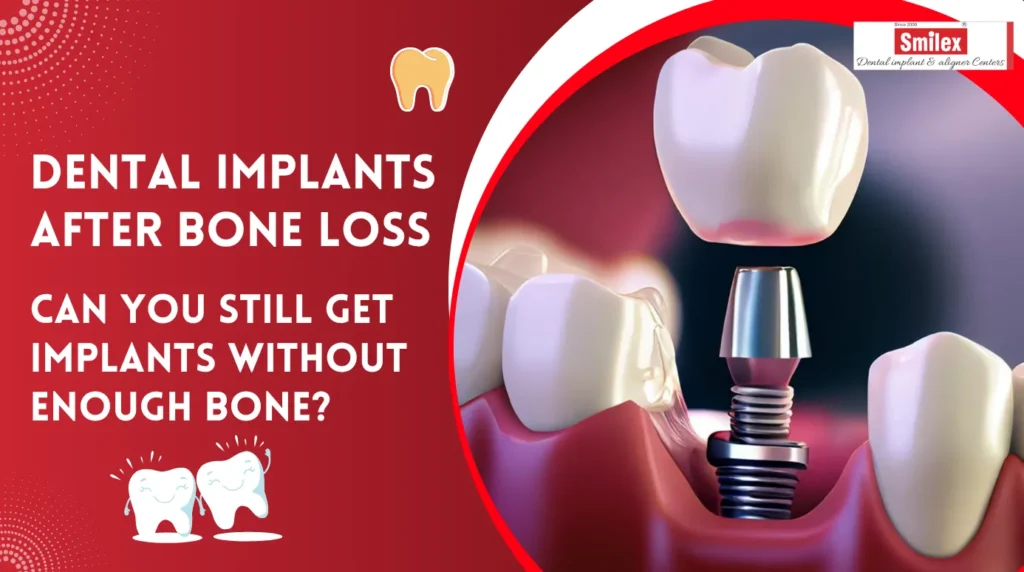
Yes, dental implants without enough bone may be possible with additional procedures. Dental implants are small posts, usually made from titanium, that are placed in the jawbone to support replacement teeth. They require adequate bone volume and quality for stability and successful healing.
If your jawbone has shrunk, your dentist will assess its height, width, density, and location before recommending treatment.
How Is Bone Availability Evaluated?
Your dentist may perform:
- A comprehensive dental and medical examination.
- Dental X-rays to assess the teeth and surrounding structures.
- A CBCT scan when indicated to evaluate three-dimensional bone anatomy and nearby nerves or sinuses.
- An assessment of gum health, bite alignment, and oral hygiene.
These findings help determine whether conventional implant placement is possible or whether additional treatment is needed.
Treatment Options for Dental Implants After Bone Loss
The appropriate treatment depends on the extent and location of bone loss, your overall health, and your treatment goals.
1. Bone Grafting for Dental Implants
Bone grafting is a procedure that adds bone material to an area with insufficient jawbone. The material may come from your own bone, a donor source, an animal-derived source, or a synthetic material, depending on the clinical situation.
Over time, the graft can integrate with the existing bone and support future implant placement. Some patients need several months of healing before receiving implants, while selected cases may allow grafting and implant placement during the same procedure.
2. Sinus Lift Procedure
When replacing upper back teeth, bone loss may leave insufficient space between the jaw and the maxillary sinus. A sinus lift raises the sinus membrane and adds bone material where needed.
This procedure can create suitable conditions for implants in selected patients.
3. Short or Angled Dental Implants
In certain cases, specially selected short implants or angled implants may help avoid areas with limited bone. Their suitability depends on the available bone, implant design, bite forces, and the clinician’s assessment. They are not appropriate for every patient.
4. Full-Arch Implant Solutions
Patients who have lost most or all of their teeth may be candidates for full-arch implant-supported teeth. Techniques such as All-on-4 or All-on-6 use strategically positioned implants to support a complete set of replacement teeth.
Some patients with bone loss may qualify without extensive grafting, but this depends on their anatomy and treatment requirements.
What If Dental Implants Are Not Suitable?
If implant treatment is not appropriate, other tooth replacement options may include:
- Dental bridges: Fixed replacement teeth supported by adjacent natural teeth or other suitable supports.
- Removable partial dentures: Replace several missing teeth and can be removed for cleaning.
- Complete dentures: Replace all teeth in an upper or lower arch.
Your dentist can explain the advantages, limitations, maintenance needs, and long-term implications of each option.
What Is the Dental Implant Procedure?
The treatment timeline varies according to bone condition and the procedures required.
- Consultation and planning: Your dentist evaluates your oral health and reviews suitable options.
- Bone preparation: Bone grafting or a sinus lift may be performed if necessary.
- Implant placement: The implant is placed into the jawbone under appropriate anaesthesia.
- Healing and integration: The bone gradually integrates with the implant, a process called osseointegration.
- Final restoration: A crown, bridge, or full-arch prosthesis is attached when the implant is ready.
Healing can take several months, particularly when bone grafting is required. Some cases allow immediate temporary teeth, but this is possible only when clinical conditions support it.
Recovery and Aftercare Following Bone Grafting
Mild swelling, discomfort, and bruising can occur after implant surgery or bone grafting. Your dentist may recommend prescribed medication, a soft diet, careful brushing, and avoiding smoking during healing.
Maintain regular dental check-ups and follow your dentist’s instructions. Good oral hygiene is essential because gum inflammation and peri-implant disease can threaten the long-term health of dental implants.
Patients with uncontrolled diabetes, active gum disease, heavy smoking habits, or certain medical conditions may need additional assessment before treatment.
Dental Implant Cost in Pune: What Should You Expect?
The cost of dental implants in Pune varies from patient to patient. There is no single price that applies to every case, especially when bone loss is involved.
Factors affecting the total treatment cost include:
- The number and type of implants required.
- The extent of bone loss.
- Whether bone grafting or a sinus lift is needed.
- The implant brand and material used for the final crown.
- The complexity of surgery and diagnostic imaging.
- Whether the treatment involves a single tooth or full-mouth rehabilitation.
Bone grafting and other preparatory procedures may increase the overall cost. Request an individual treatment plan and written estimate after your dental examination to understand the likely expenses.
Frequently Asked Questions
1. Can I get dental implants years after losing a tooth?
Yes. Many patients can receive implants years after tooth loss. However, bone resorption may mean that grafting or another preparatory procedure is required.
2. Is bone grafting always necessary before dental implants?
No. Bone grafting is recommended only when the available bone is insufficient for the planned implant. Some patients can receive implants without additional bone augmentation.
3. How long does bone grafting take to heal?
Healing commonly takes several months, depending on the graft size, location, material, and individual response. Your dentist will determine when implant placement is appropriate.
4. Are dental implants safe for older adults?
Age alone does not automatically rule out dental implants. Overall health, bone quality, medications, gum condition, and the ability to maintain oral hygiene are important considerations.
5. Where can I get dental implants after bone loss in Pune?
You can consult Smilex International Dental Centre, Pune, for an assessment of your jawbone, implant eligibility, and suitable treatment options with Dr. Vijay Deshmukh, M.D.S., Chief Implant Surgeon.
Restore Your Smile with the Right Implant Treatment Plan
Bone loss does not automatically mean you cannot receive dental implants. With appropriate assessment and treatment planning, options such as bone grafting, sinus lifts, or carefully selected implant techniques may make tooth replacement possible.
If you are considering dental implants after bone loss, book a consultation at Smilex International Dental Centre, Pune. Consult Dr. Vijay Deshmukh, M.D.S., Chief Implant Surgeon, to discuss your bone condition, available treatment options, expected timeline, and estimated cost. A personalised examination is the best first step towards restoring your smile and chewing function.
Find the clinic here: Get direction
Call Now: +91 97654 07660
Address: 3rd Floor, Rahul Capital, Prabhat Road, Erandwane, Pune, Maharashtra 411004
Disclaimer: AI-generated content, reviewed and edited by a Dentist