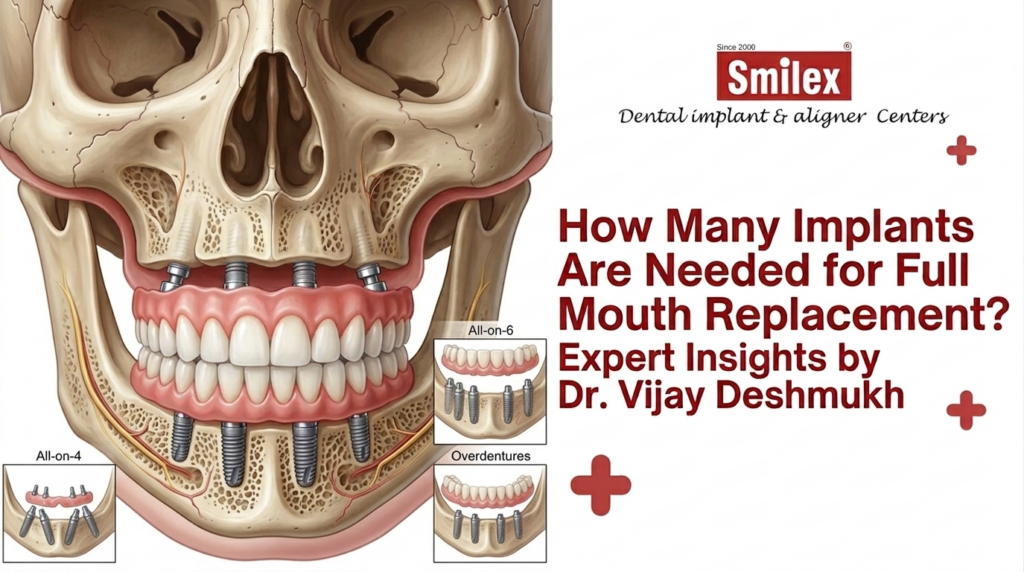
How Many Implants Are Needed for Full Mouth Replacement? Expert Insights by Dr. Vijay Deshmukh

Losing all teeth can significantly affect your confidence, speech, chewing ability, and overall quality of life. Fortunately, modern dentistry offers advanced and long-lasting solutions for full mouth teeth replacement using dental implants. One of the most common questions patients ask is: How many implants are needed for full mouth teeth replacement?

At Smilex Dental Implant & Aligner Centers, Prabhat Road, Erandwane, Pune, under the expert guidance of Dr. Vijay Deshmukh (M.D.S.), Chief Implant Surgeon and a super-specialist in All-on-4 and All-on-6 dental implants, patients receive world-class implant care in Pune with predictable and life-changing results.
Understanding Full Mouth Dental Implants

Full mouth dental implants are a permanent solution that replaces missing teeth using titanium implants surgically placed into the jawbone. These implants act as artificial tooth roots, supporting fixed teeth that look, feel, and function like natural teeth.

Unlike removable dentures, dental implants provide:

  • Superior stability
  • Natural aesthetics
  • Better chewing efficiency
  • Prevention of bone loss
  • Long-term durability

If you are searching for a trusted dentist in Pune or a reliable dental clinic in Pune for full mouth rehabilitation, dental implants are the gold standard treatment.

So, How Many Implants Are Needed for Full Mouth Teeth Replacement?

The number of implants required depends on your jawbone condition, bite alignment, and the type of implant technique used. Below are the most commonly recommended options for permanent teeth replacement, along with an overview of the teeth replacement cost in India, helping patients choose the most suitable and affordable treatment option.

1. All-on-4 Dental Implants (4 Implants per Jaw)

All-on-4 Dental Implants

The All-on-4 technique uses four implants per jaw (upper orf lower) to support a full set of fixed teeth.

Ideal for:

  • Patients with reduced bone density
  • Patients who want faster treatment
  • Those seeking a cost-effective solution

Benefits:

  • Fewer implants required
  • Often avoids bone grafting
  • Immediate teeth possible
  • Shorter recovery time

This method is widely preferred at Smilex for eligible patients looking for dental implants in Pune with predictable success.

2. All-on-6 Dental Implants (6 Implants per Jaw)

All-on-6 Dental Implants

The All-on-6 technique involves six implants per jaw, offering additional support and load distribution.

Ideal for:

  • Patients with good bone quality
  • Patients who want extra strength and longevity
  • Those with strong chewing forces

Benefits:

  • Enhanced stability
  • Better long-term durability
  • Improved bite force
  • Reduced stress on implants

Dr. Vijay Deshmukh, with 32 years of experience, is a leading expert in All-on-6 dental implants in Pune, delivering excellent functional and aesthetic outcomes.

3. Traditional Full Mouth Implants (8–10 Implants per Jaw)

In some cases, especially when individual crowns or bridges are preferred, 8 to 10 implants per jaw may be placed.

Ideal for:

  • Patients with excellent bone volume
  • Those wanting individual tooth replacement
  • Complex bite cases

Note: This option involves longer treatment time, higher cost, and sometimes bone grafting.

Which Option Is Best for You?

There is no one-size-fits-all answer. The right treatment depends on:

  • Jawbone density
  • Oral health condition
  • Age and medical history
  • Lifestyle habits
  • Budget and expectations

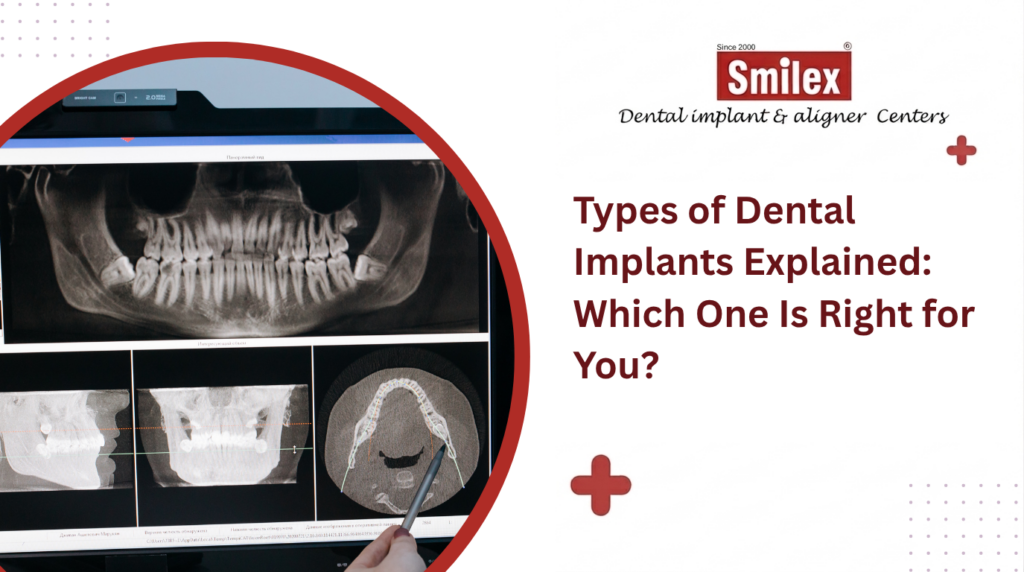
At Smilex Dental Implant & Aligner Centers, advanced 3D CBCT scans and digital implant planning help determine the most suitable solution for every patient.

Why Choose Smilex Dental Implant & Aligner Centers, Pune?

If you are looking for a top-rated dental clinic in Prabhat Road, erandwane, Pune for full mouth dental implants, Smilex stands out for its expertise, technology, and patient-centric approach.

Led by Dr. Vijay Deshmukh (M.D.S.)

  • Chief Implant Surgeon
  • Super-specialist in All-on-4 & All-on-6 dental implants
  • 32 years of clinical experience
  • Trusted name in advanced implant dentistry

What Makes Smilex Different?

  • International implant protocols
  • State-of-the-art technology
  • High success rates
  • Ethical and transparent treatment planning
  • Comfortable and hygienic clinic environment

Patients across Pune trust Smilex when searching for a dentist in Pune specializing in full mouth dental implants.

Are Full Mouth Dental Implants Safe?

Yes. When performed by an experienced implantologist like Dr. Vijay Deshmukh, dental implants are extremely safe and have success rates above 98%. Proper diagnosis, surgical precision, and post-treatment care ensure long-lasting results.

Cost of Full Mouth Dental Implants in Pune

The cost depends on:

  • Number of implants
  • Implant system used
  • Type of prosthesis
  • Need for additional procedures

Smilex offers customized treatment plans to suit different needs while maintaining high-quality standards for dental implants in Prabhat Road, Erandwane, Pune.

Life After Full Mouth Implants

With full mouth implants, patients can:

  • Eat comfortably without restrictions
  • Smile confidently
  • Speak clearly
  • Enjoy a natural-looking smile
  • Experience improved quality of life

Dental implants truly restore both function and confidence.

Book Your Consultation Today

If you are considering full mouth teeth replacement and want expert guidance from a leading dentist in Pune, visit Smilex Dental Implant & Aligner Centers.

Call Now: +91 97654 07660
Dr. Vijay Deshmukh (M.D.S.)
Chief Implant Surgeon | All-on-4 & All-on-6 Specialist

Address: 3rd Floor, Rahul Capital, Prabhat Road, Erandwane, Pune, Maharashtra 411004
Get Direction

When Do You Need Orthodontic Treatment? Signs You Shouldn’t Ignore

A confident smile is not just about looks—it reflects good oral health and proper jaw alignment. Many people assume orthodontic treatment is only for children or teenagers, but the truth is that orthodontic problems can affect patients of all ages. Ignoring early signs may lead to long-term dental complications, jaw pain, and difficulty in maintaining oral hygiene.

At Smilex Dental Implant & Aligner Centers, Prabhat Road, Erandwane, Pune, patients receive advanced orthodontic treatment in Pune under the expert care of Dr. Sonali Deshmukh (M.D.S.), Chief Orthodontist and Aligner Specialist, with over 25 years of clinical experience and practice since 1998. If you are searching for the best orthodontist near me, Smilex offers personalized, modern orthodontic solutions designed for long-lasting comfort, function, and a confident smile.

What Is Orthodontic Treatment?

Orthodontic treatment focuses on correcting:

  • Crooked or misaligned teeth
  • Improper bite (malocclusion)
  • Jaw alignment issues

Using braces or clear aligners, orthodontic treatment improves not only the appearance of your smile but also overall oral health. If you’re searching for a trusted dentist in Pune or a specialized dental clinic in Pune, orthodontic care plays a vital role in preventive dentistry.

Signs You Need Orthodontic Treatment (Don’t Ignore These!)

  1. Signs of Attrition

• Flattened or shortened teeth

• Chipped or cracked edges

• Uneven tooth surfaces

• Increased tooth sensitivity

• Yellowing teeth (dentin showing through)

• Jaw pain or morning headaches

  1. Crooked or Crowded Teeth

Teeth that overlap or grow out of position are difficult to clean properly, increasing the risk of cavities and gum disease. Crowding is one of the most common reasons patients seek orthodontic treatment in Pune.

  1. Gaps Between Teeth

Excessive spacing can trap food particles and affect speech and smile aesthetics. Orthodontic treatment helps close gaps and create a balanced smile.

  1. Difficulty Chewing or Biting

If chewing feels uncomfortable or uneven, it may indicate bite problems. Orthodontic correction improves chewing efficiency and jaw function.

  1. Overbite, Underbite, or Crossbite

Bite issues are not just cosmetic—they can cause:

  • Jaw pain
  • Tooth wear
  • Speech problems

Early orthodontic intervention prevents long-term damage.

  1.  Jaw Pain, Clicking, or Headaches

Frequent jaw pain or clicking sounds may indicate misalignment of the jaw. Orthodontic treatment helps correct bite-related jaw stress and improves overall comfort.

  1. Mouth Breathing or Speech Issues

Improper jaw alignment can affect breathing patterns and speech clarity, especially in children. Orthodontic treatment can help improve both.

  1. Early or Delayed Loss of Baby Teeth (Children)

Children should ideally have an orthodontic evaluation by age 7. Early detection allows interceptive treatment and prevents complex issues later.

Orthodontic Treatment for Adults – A Growing Trend in Pune

Orthodontic care is no longer limited to teenagers. Today, many adults are opting for orthodontic treatment to improve both aesthetics and oral health. At Smilex, adult patients prefer discreet and modern solutions that fit their lifestyle. Aligner/Invisalign to create space for implant; patients who have weak teeth and spacing, adults with worn-out teeth, and deep bites are excellent cases for Aligners/Invisalign.

Trending Orthodontic Techniques (2025–2026)

1. Clear Aligners (Invisalign & Advanced Aligners)

One of the most popular orthodontic treatments in Pune, clear aligners are:

  • Virtually invisible
  • Removable
  • Comfortable
  • Ideal for working professionals

Dr. Sonali Deshmukh is a specialist in aligner therapy, offering predictable and customized results.

2. Self-Ligating Braces

These advanced braces reduce friction, require fewer appointments, and shorten treatment time compared to traditional braces.

3. Digital Smile Design & 3D Treatment Planning

Using digital scans instead of impressions, Smilex provides:

  • Precise diagnosis
  • Faster planning
  • Better treatment outcomes

This technology improves patient comfort and accuracy.

4. Accelerated Orthodontics

Modern techniques now help reduce treatment duration using advanced biomechanics and aligner protocols—perfect for patients seeking faster results.

5. Early Interceptive Orthodontics for Children

Early treatment helps guide jaw growth and reduces the need for extractions or surgery later in life.

Why Choose Smilex Dental Implant & Aligner Centers, Pune?

If you are looking for a reliable dental clinic in Prabhat Road, Erandwane, Pune for orthodontic care, Smilex stands out for its expertise and patient-focused approach.

Led by Dr. Sonali Deshmukh (M.D.S.)

  • Chief Orthodontist & Aligner Specialist
  • 25 years of experience
  • Practicing since 1998
  • Expert in braces and clear aligners

What Makes Smilex Unique?

  • Advanced orthodontic technology
  • Customized treatment plans
  • Ethical and transparent care
  • Comfortable, hygienic clinic environment
  • Proven results for children, teens, and adults

Patients searching online for a dentist in Pune for braces or aligners trust Smilex for quality orthodontic solutions.

When Should You Visit an Orthodontist?

You should book a consultation if:

  • Your teeth are misaligned or crowded
  • You experience jaw pain or bite issues
  • Your child shows early signs of dental irregularities
  • You want a confident, well-aligned smile

Early diagnosis leads to simpler, faster, and more effective treatment.

Book Your Orthodontic Consultation Today

Don’t ignore the signs—timely orthodontic treatment can prevent future dental problems and transform your smile.

Call Now: +91 97654 07660
Smilex Dental Implant & Aligner Centers
Dr. Sonali Deshmukh (M.D.S.)
Chief Orthodontist & Aligner Specialist

Address: 3rd Floor, Rahul Capital, Prabhat Road, Erandwane, Pune, Maharashtra 411004

Find Clinic Here: Get Direction

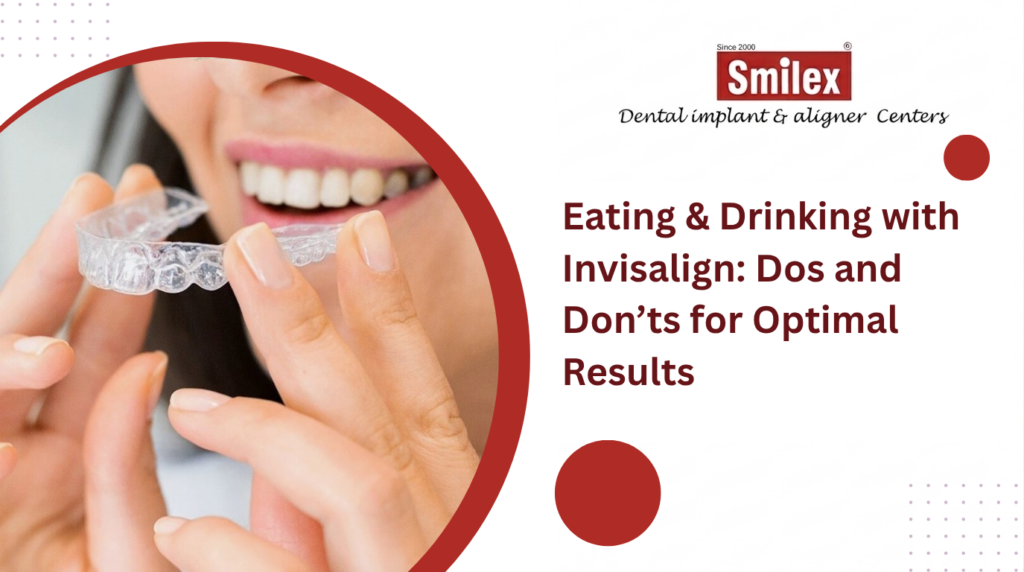
Eating & Drinking with Invisalign: Dos and Don’ts for Optimal Results

Invisalign has transformed the way people achieve a straight, confident smile. Unlike traditional braces, Invisalign aligners are clear, removable, and comfortable, making them a popular choice among teens and adults alike. However, to get the best results from your Invisalign treatment, it’s essential to follow the right eating and drinking habits.

At Smilex International Dental Centre, a trusted dental clinic in Prabhat Road, Erandwane, Pune, Dr. Sonali Deshmukh – M.D.S., Chief Orthodontist and Aligner Specialist, helps patients achieve perfect smiles with customized Invisalign treatment in Pune. This blog will guide you through the essential dos and don’ts of eating and drinking with Invisalign, ensuring smooth treatment progress and optimal results.

Understanding Invisalign and Its Importance

Invisalign uses a series of custom-made, clear aligners that gradually move your teeth into proper alignment. Each aligner must be worn for 20–22 hours a day, making discipline crucial for success. Poor eating habits or incorrect care can delay results, increase Invisalign cost in Pune due to additional aligners, and even damage your trays.

Let’s explore how to eat and drink smartly during your Invisalign journey.

Dos of Eating & Drinking with Invisalign

1. Remove Aligners Before Eating

Always remove your Invisalign aligners before eating any food. Eating with aligners on can:

  • Damage or crack the trays
  • Cause food particles to get trapped
  • Lead to bacterial buildup and bad breath

At Smilex International Dental Centre, Prabhat Road, Erandwane, Pune, patients are advised to carry their aligner case to safely store trays during meals.

2. Brush and Rinse After Every Meal

Before putting your aligners back in, brush your teeth or rinse thoroughly. This prevents:

  • Plaque accumulation
  • Tooth decay
  • Yellowing of aligners

Maintaining oral hygiene is key to successful Invisalign treatment.

3. Drink Plain Water with Aligners On

Plain, room-temperature water is the only safe drink while wearing Invisalign. It keeps you hydrated without damaging your aligners or teeth.

4. Follow a Consistent Meal Schedule

Frequent snacking reduces aligner wear time. Try to:

  • Stick to 3 main meals
  • Avoid unnecessary snacking
  • Wear aligners for the recommended hours

This helps keep your treatment on track and prevents delays.

5. Clean Aligners Daily

Use a soft toothbrush and clear aligner cleaner to clean your trays daily. Clean aligners:

  • Stay invisible
  • Prevent odor
  • Protect your oral health

Dr. Sonali Deshmukh emphasizes proper aligner hygiene for long-term dental health.

Don’ts of Eating & Drinking with Invisalign

1. Don’t Eat with Aligners On

This is one of the most common mistakes. Eating with Invisalign can:

  • Warp the aligners
  • Cause cracks
  • Stain them permanently

Replacing damaged trays may increase your overall Invisalign cost in Pune.

2. Avoid Hot Beverages While Wearing Aligners

Hot tea, coffee, or soups can distort the aligners, making them ineffective. Always remove aligners before consuming hot drinks.

3. Don’t Drink Sugary or Colored Beverages with Aligners

Drinks like:

  • Coffee
  • Tea
  • Soda
  • Fruit juices
  • Energy drinks

can stain aligners and trap sugar against your teeth, increasing the risk of cavities.

4. Don’t Skip Cleaning Before Reinserting Aligners

Putting aligners back without cleaning your teeth can lead to:

  • Tooth decay
  • Gum problems
  • Bad breath

This can compromise the results of your Invisalign treatment in Pune.

5. Don’t Lose or Misplace Your Aligners

Always store aligners in their case. Wrapping them in tissue often leads to accidental disposal, which can delay treatment.

What Foods Are Best During Invisalign Treatment?

Since aligners are removable, there are no strict food restrictions, but it’s best to:

  • Avoid extremely sticky or sugary foods
  • Reduce acidic items
  • Maintain a balanced, tooth-friendly diet

This supports overall oral health and enhances treatment success.

Why Choose Smilex International Dental Centre for Invisalign in Pune?

Choosing the right dental clinic in Pune is essential for successful Invisalign treatment. At Smilex International Dental Centre, patients benefit from:

  • Advanced Invisalign technology
  • Personalized treatment planning
  • Expert care by Dr. Sonali Deshmukh – M.D.S., Chief Orthodontist and Aligner Specialist
  • Transparent consultation on Invisalign cost in Pune
  • Comfortable, patient-focused environment

With years of experience in orthodontics and aligner therapy, Dr. Sonali Deshmukh ensures precise tooth movement and predictable results.

Invisalign Cost in Pune: What to Expect

The Invisalign cost in Pune depends on:

  • Complexity of alignment
  • Duration of treatment
  • Number of aligners required

At Smilex International Dental Centre, patients receive clear guidance on costs with no hidden charges, ensuring value-driven care.

Final Thoughts

Eating and drinking correctly during Invisalign treatment plays a crucial role in achieving a healthy, confident smile. By following these simple dos and don’ts, you can avoid delays, maintain excellent oral hygiene, and enjoy a smooth Invisalign journey.

If you’re considering Invisalign treatment in Pune or already wearing aligners and need expert guidance, visit Smilex International Dental Centre.

Book your Invisalign consultation today:
Call
+91 97654 07660

Find the clinic here: Get Direction

Address: 3rd Floor, Rahul Capital, Prabhat Road, Erandwane, Pune, Maharashtra 411004

Let Dr. Sonali Deshmukh help you achieve a perfectly aligned smile with comfort, confidence, and care.

How to Prevent Tooth Decay: Proven Tips for a Cavity-Free Smile

A healthy smile is one of the most valuable assets you can have. However, tooth decay remains one of the most common dental problems affecting people of all ages. If left untreated, it can lead to cavities, pain, sensitivity, and even tooth loss. If you are searching for how to clean teeth at home, how to protect teeth, teeth sensitivity treatment, or cavity prevention near me, this complete guide will help you understand everything from causes to treatments and prevention. At Smilex International Dental Centre, Prabhat Road, Erandwane, Pune, we offer advanced solutions to restore and enhance your smile.

What is Tooth Decay & How Does It Happen?

Tooth decay, also known as dental caries, occurs when harmful bacteria in your mouth produce acids that damage the tooth enamel.

How Tooth Decay Happens:

  • Bacteria feed on sugars from food
  • They produce acid
  • Acid lowers the pH level in the mouth
  • When pH drops below 5.5, enamel begins to dissolve
  • This leads to cavities over time

Key Point:

The balance between acid attack and saliva repair determines your oral health.

 Common Causes of Tooth Decay

  • Frequent consumption of sugary foods
  • Poor oral hygiene
  • Dry mouth
  • Acidic beverages (soda, citrus drinks)
  • Plaque buildup
  • Irregular dental visits

 Tooth Decay Prevention

To prevent tooth decay, maintain proper oral hygiene by brushing twice daily, flossing regularly, and limiting sugar intake. Tooth decay occurs when bacteria produce acid that lowers the mouth’s pH below 5.5, damaging enamel. Using fluoride toothpaste, staying hydrated, and visiting a dentist regularly are the most effective ways to protect your teeth and avoid cavities.

How to Prevent Dental Decay (Daily Habits That Work)

Preventing tooth decay is simple if you follow consistent habits:

✔ Brush Twice Daily

Use fluoride toothpaste and brush for at least 2 minutes.

✔ Floss Every Day

Removes plaque from areas your toothbrush cannot reach.

✔ Limit Sugar Intake

Avoid sticky and sugary snacks.

✔ Drink Water Frequently

Helps wash away food particles and neutralizes acids.

✔ Visit a Dentist Regularly

Professional checkups help detect issues early.

 How to Clean Teeth at Home (Step-by-Step Routine)

If you’re wondering how to clean your teeth at home, follow this daily routine:

1. Proper Brushing Technique

  • Use a soft-bristle toothbrush
  • Hold it at a 45-degree angle
  • Use gentle circular motions

2. Use Fluoride Toothpaste

Fluoride strengthens enamel and prevents cavities.

3. Floss Once Daily

Essential for removing plaque between teeth.

4. Clean Your Tongue

Reduces bacteria and bad breath.

5. Use Mouthwash

Helps kill bacteria and maintain freshness.

6. Rinse After Meals

Especially after consuming sugary or acidic foods.

 How to Protect Your Teeth Naturally

To protect your teeth and maintain oral health:

  • Avoid excessive sugar and acidic foods
  • Eat calcium-rich foods like milk and cheese
  • Use a mouthguard if you grind your teeth
  • Stay hydrated
  • Replace your toothbrush every 3 months

 Teeth Sensitivity: Causes & Symptoms

Tooth sensitivity is a common issue that causes discomfort while eating or drinking hot, cold, or sweet items.

Causes of Sensitive Teeth:

  • Enamel erosion
  • Gum recession
  • Tooth decay
  • Cracked teeth
  • Aggressive brushing

Symptoms:

  • Sharp pain while eating hot or cold foods
  • Discomfort while brushing
  • Sensitivity to sweets

 Teeth Sensitivity Treatment (Professional & Home Remedies)

If you’re looking for how to cure sensitive teeth, here are the best solutions:

 Professional Treatments

1. Desensitizing Toothpaste

Blocks nerve signals and reduces pain.

2. Fluoride Treatment

Strengthens enamel and protects teeth.

3. Dental Bonding

Covers exposed root surfaces.

4. Gum Grafting

Used in severe gum recession cases.

5. Root Canal Treatment

Recommended for severe sensitivity.

 Home Remedies for Sensitive Teeth

  • Use toothpaste for sensitive teeth
  • Avoid acidic foods
  • Rinse with warm salt water
  • Use a soft-bristle toothbrush
  • Apply clove oil (natural remedy)

Best Tips for Teeth Whitening

Want a brighter smile? Follow these best teeth whitening tips:

At-Home Whitening Tips:

  • Brush regularly
  • Use whitening toothpaste
  • Avoid coffee, tea, and smoking
  • Eat crunchy fruits like apples

Professional Whitening Options:

  • Laser whitening
  • Bleaching treatments

 Dental Treatments for Tooth Decay

If decay occurs, professional dental care is required:

TreatmentPurpose
Dental Cleaning (Scaling)Removes plaque and tartar
FillingsTreat small cavities
Root Canal TreatmentTreat deep infections
Dental CrownsRestore damaged teeth
Dental ImplantsReplace missing teeth

Dental Treatment Cost in India

Here’s an approximate cost range:

TreatmentCost (INR)
Cleaning₹1,000 – ₹3,000
Filling₹800 – ₹3,000
Root Canal₹3,000 – ₹10,000
Whitening₹5,000 – ₹20,000
Dental Implants₹20,000 – ₹50,000

Note: Costs may vary depending on the clinic and case complexity.

 When to Search for “Cavity Prevention Near Me”

You should visit a dental clinic if you notice:

  • Tooth pain
  • Sensitivity
  • Bleeding gums
  • Bad breath
  • Visible cavities

Early diagnosis prevents major treatments.

 Pros and Cons of Dental Treatments

Pros

  • Prevents tooth loss
  • Improves oral health
  • Enhances smile
  • Reduces pain

Cons

  • May require multiple visits
  • Cost can be high
  • Some procedures cause temporary discomfort

 Teeth Protection Tips 

  • Brush twice daily
  • Floss regularly
  • Avoid sugary snacks
  • Drink water
  • Visit your dentist every 6 months

How to Keep Your Teeth Healthy 

  1. Maintain daily oral hygiene (brushing + flossing)
  2. Get regular dental checkups

Looking for Cavity Prevention Near You?

If you are searching for cavity prevention near you, Smilex offers advanced dental care with experienced dentists and modern technology. Whether you need a routine checkup, teeth cleaning, or treatment for cavities and sensitivity, Smilex Pune ensures personalized and affordable dental care.

 Frequently Asked Questions (FAQ)

Q1. How to clean teeth at home naturally?

Use mouthwash, floss frequently, and brush twice a day. Oil pulling can also help reduce bacteria.

Q2. How to prevent dental decay?

Limit sugar intake, maintain oral hygiene, and visit your dentist regularly.

Q3. How to cure sensitive teeth permanently?

Use desensitizing toothpaste or consult a dentist for treatments like fluoride or bonding.

Q4. What is the fastest way to reduce tooth sensitivity?

Use sensitive toothpaste and avoid extremely hot or cold foods.

Q5. How to protect teeth from damage?

Avoid sugary foods, brush properly, and stay hydrated.

Q6. Can tooth decay be reversed?

Early-stage decay can be reversed with fluoride and proper oral care.

Q7. How often should I visit a dentist?

Every 6 months for routine checkups.

 Conclusion

Tooth decay is preventable with the right habits and timely care. Whether you’re learning how to clean teeth at home, searching for teeth sensitivity treatment, or looking for ways to protect your teeth, consistency is the key.By following proper oral hygiene, reducing sugar intake, and visiting a trusted dental clinic like Smilex, you can maintain a healthy and confident smile for life.

Find the clinic here: Get direction

Call Now: +91 97654 07660

Address: 3rd Floor, Rahul Capital, Prabhat Road, Erandwane, Pune, Maharashtra 411004

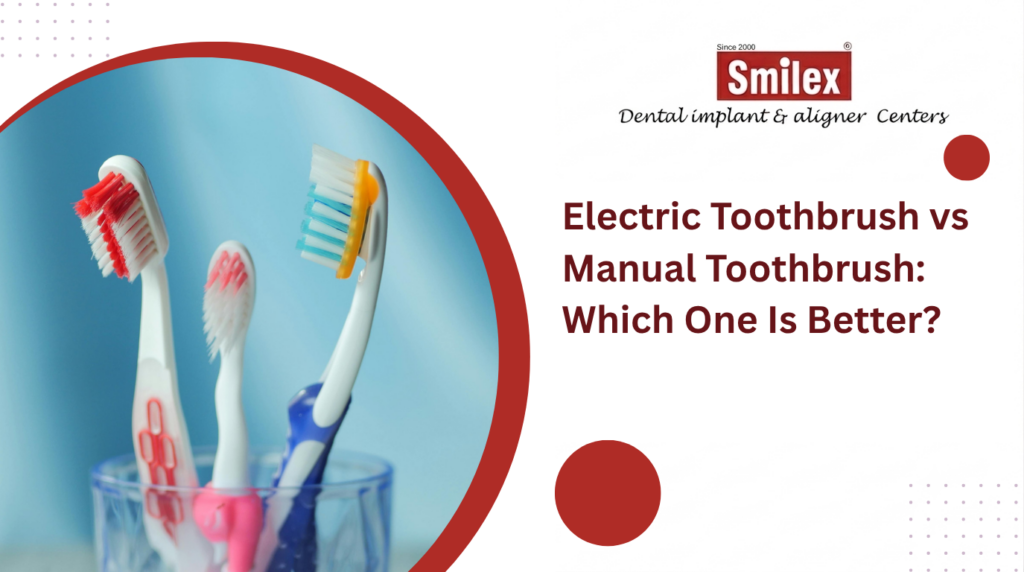
Electric Toothbrush vs Manual Toothbrush: Which One Is Better?

Maintaining good oral hygiene starts with a simple habit — brushing your teeth properly. But with so many toothbrush options available, patients often wonder: Electric toothbrush vs manual? Which one is actually better Both types can clean your teeth effectively if used correctly. However, depending on your brushing style, oral health, and comfort, one may be more suitable for you. At Smilex Dental Clinic in Prabhat Road, Erandwane, Pune, we guide patients to choose the right toothbrush while ensuring optimal gum and enamel health.

Understanding the Basics: Manual vs Electric Toothbrush

Manual Toothbrush

The traditional toothbrush relies entirely on your brushing motion — up-and-down, circular, or back-and-forth — to remove plaque and food particles. Manual brushes are affordable, easy to use, and portable, but cleaning efficiency depends on technique and time spent brushing.

Electric Toothbrush

An electric toothbrush uses oscillating, rotating, or sonic vibrations to move the bristles rapidly. It does most of the brushing work for you, reaching hard-to-clean areas, and often removes more plaque than a manual brush.

Do electric toothbrushes clean better than manual ones?

 Electric toothbrushes can remove up to 20–30% more plaque than manual brushes. They reach hard-to-clean areas, reduce gingivitis risk, and protect gums with built-in pressure sensors. For patients with braces, implants, or dexterity issues, electric brushes are especially effective.

Which toothbrush is better: electric or manual?

Both brushes can clean teeth effectively if used properly. Manual brushes work well with correct technique, while electric toothbrushes offer consistency, easier plaque removal, timers, and gum protection. Choose based on your oral health needs, comfort, and brushing habits.

How to remove plaque safely without harming enamel?

Brush gently twice a day with a soft-bristled toothbrush, floss daily, use fluoride toothpaste, rinse with antibacterial mouthwash, and visit your dentist every six months for professional cleaning. Avoid harsh scrubbing or abrasive products to protect enamel.

Comparing Electric and Manual Toothbrushes

FeatureManual ToothbrushElectric Toothbrush
Cleaning EfficiencyDepends on user technique and durationConsistent motion ensures thorough cleaning
Ease of UseRequires manual control and precisionIdeal for limited dexterity (children, elderly, arthritis)
Plaque RemovalRemoves plaque if used correctlyStudies show up to 20–30% more plaque removal
Gum HealthEffective with gentle brushingPressure sensors prevent over-brushing and protect gums
Timer FeatureUser must track 2 minutesBuilt-in timers ensure recommended brushing duration
CostAffordable and widely availableHigher upfront cost; replacement heads needed
Travel-FriendlyLightweight, no charging requiredNeeds charging; bulkier to pack

How Each Toothbrush Affects Plaque and Tartar

Plaque and tartar buildup can cause gum disease and tooth decay if ignored. An electric toothbrush is particularly effective for:

  • Removing plaque along the gumline
  • Reaching back molars and tight spaces
  • Reducing tartar accumulation over time

Manual brushes can still be effective with proper technique, soft bristles, and consistent use.

Professional Tooth Cleaning and Maintenance

Even the best toothbrush cannot remove hardened tartar. At Smilex Prabhat Road, Erandwane, Pune, we recommend:

  • Professional Scaling & Polishing: Removes tartar and plaque safely
  • Regular Checkups: Every six months for gum and enamel health
  • Fluoride Treatments: Strengthen enamel and prevent decay

Pros and Cons: Electric vs Manual Toothbrush

✅ Advantages❌ Limitations
Electric ToothbrushHigher upfront cost
Removes more plaque consistentlyNeeds charging and replacement heads
Easier for children and elderlySlightly bulky for travel
Built-in timer ensures proper brushingCan be noisy for some users
Protects gums with pressure sensors

| Manual Toothbrush | Limitations |
| Affordable and widely available | Requires proper technique |
| Portable and lightweight | Plaque removal depends on user skill |
| No charging required | No built-in timer or sensors |
| Easy to replace | May not reach tight spaces efficiently |

Research Evidence

Multiple studies published in the Journal of Clinical Periodontology and Cochrane Reviews show:

  • Electric toothbrushes reduce plaque by 21% more than manual brushes.
  • Gingivitis and gum inflammation improve faster with electric toothbrush use.
  • Over time, consistent electric brushing can improve gum health and enamel protection.

However, for patients who brush properly and consistently, manual brushes still provide excellent results.

Treatment Process: Choosing the Right Toothbrush

Step 1: Dental Assessment

  • Dentist evaluates gum health, plaque levels, and enamel condition
  • Identifies challenges like braces, implants, or limited hand mobility

Step 2: Recommendation

  • Manual toothbrush: For disciplined patients with proper technique
  • Electric toothbrush: For enhanced plaque control, convenience, and motivation

Step 3: Follow-up and Maintenance

  • Track brushing technique and gum response
  • Replace toothbrush or electric brush head every 3–4 months
  • Combine with flossing, mouthwash, and professional cleaning

Cost Comparison

Treatment / ToolAverage Cost in India (INR)
Manual Toothbrush₹50 – ₹300
Electric Toothbrush (Basic)₹1,500 – ₹4,000
Electric Toothbrush (Advanced)₹4,500 – ₹15,000
Replacement Heads₹500 – ₹1,500
Professional Scaling & Polishing₹1,500 – ₹5,000

Investing in an electric toothbrush can reduce long-term gum disease and plaque-related treatment costs.

Frequently Asked Questions (FAQs)

Q1: Do electric toothbrushes clean better than manual ones?

A1: Yes, studies show electric brushes remove 20–30% more plaque, especially in hard-to-reach areas.

Q2: Is an electric toothbrush worth the investment?

A2: For people with braces, implants, weak gums, or dexterity issues, electric toothbrushes improve plaque removal and gum health.

Q3: Can a manual toothbrush maintain healthy teeth?

A3: Absolutely, if used correctly twice daily with proper brushing technique and flossing.

Q4: How often should I replace toothbrushes or brush heads?

A4: Every 3–4 months, or earlier if bristles fray.

Q5: Do electric toothbrushes harm enamel?

A5: No, modern electric brushes have pressure sensors to prevent over-brushing and enamel wear.

Pro Tips for Best Results

  1. Brush twice daily for at least 2 minutes
  2. Floss once daily to remove hidden plaque
  3. Use fluoride toothpaste for enamel protection
  4. Rinse with antibacterial mouthwash
  5. Visit your dentist every 6 months for scaling and checkups

Professional cleaning removes tartar that no toothbrush can reach — keeping gums healthy and teeth bright.

Winding Up

When it comes to electric toothbrush vs manual toothbrush, there’s no one-size-fits-all answer. The best toothbrush is the one you use properly every day.If you’re unsure which brush suits your teeth and gums, consult Smilex Dental Clinic in Pune. Our expert Dentist in Pune can evaluate your oral health, brushing technique, and lifestyle — and guide you toward the right tools for a lifetime of confident smiles.

Schedule your appointment at Smilex Dental Clinic today and choose the toothbrush that keeps your teeth and gums healthy for years to come.

Find the clinic here: Get direction

Call Now: +91 97654 07660

Address: 3rd Floor, Rahul Capital, Prabhat Road, Erandwane, Pune, Maharashtra 411004

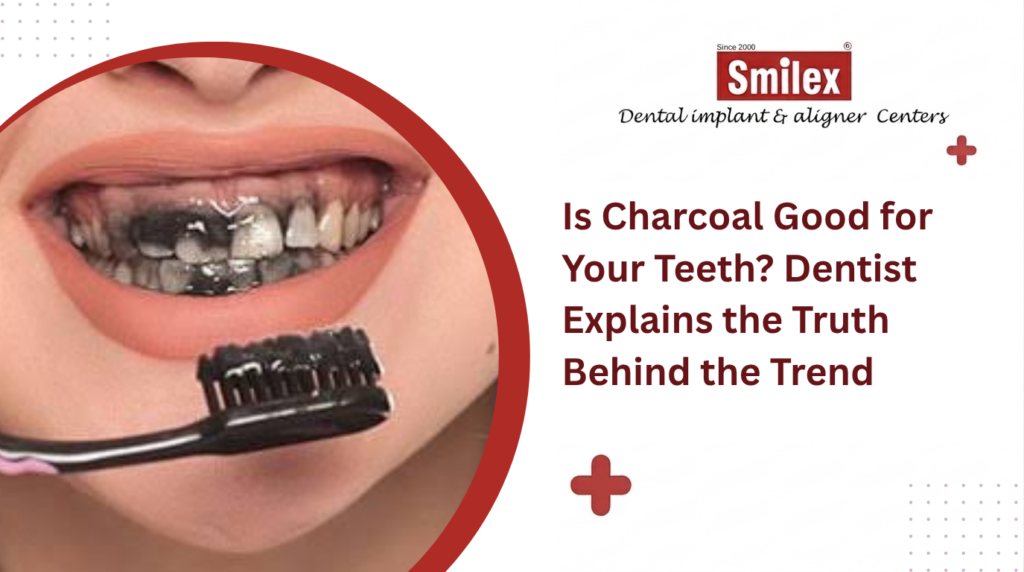
Is Charcoal Good for Your Teeth? Dentist Explains the Truth Behind the Trend

In recent years, charcoal toothpaste and activated charcoal powders have exploded in popularity. Promoted as a “natural whitening” and detox solution, many people wonder: Is charcoal good for your teeth? In this blog, we’ll dive into what science says, potential risks, and when (if ever) charcoal might have a safe role in your oral hygiene.Many people ask, is charcoal good for teeth, especially with the rising trend of charcoal toothpaste for whitening. While it may seem like a natural solution, the reality is quite different.

What Is Charcoal in Dental Products?

  • Activated charcoal is carbon processed to have many tiny pores, increasing its surface area.
  • It can adsorb (bind) stains, toxins, or “impurities” on tooth enamel.
  • You’ll find charcoal in:
    • Powders (loose or in jars)
    • Charcoal-infused toothpastes
    • Charcoal mouthwashes or rinses

However, just because something is “black and trendy” doesn’t mean it’s safe or effective for your teeth.

What the Research Says: Pros & Cons

Possible Benefits

1. Surface stain removal (mild)
Some users report that charcoal helps lift surface stains (from coffee, tea, smoking). Because it’s somewhat abrasive, it might polish the enamel superficially. These effects are often highlighted as charcoal for teeth benefits, especially for temporary whitening.

2. Marketing appeal/placebo effect
The visual of black foam or charcoal “pulling out impurities” is psychologically satisfying. Many brands promote these as charcoal for teeth benefits, although scientific backing is limited.

Risks & Downsides (Important to Know)

1. Abrasiveness/enamel erosion
Many charcoal products are more abrasive than standard fluoride toothpaste. Over time, this can wear down enamel, making teeth more sensitive and prone to decay.

2. Lack of fluoride
Many charcoal products don’t contain fluoride, a key ingredient for protecting teeth from decay and strengthening enamel.

3. No strong clinical evidence for whitening
High-quality clinical trials are scarce. While some brands claim multiple charcoal for teeth benefits, the whitening effect is often modest and temporary.

4. Uneven results & grit
Charcoal may produce uneven color (patchy whitening) or leave black residue in cracks or under gums, causing aesthetic complaints.

5. Gum irritation
Abrasive particles may irritate gums, especially in people with gum recession or sensitive tissues.

6. Masking underlying problems
If you’re using charcoal to mask yellowing from decay or enamel thinning, it doesn’t treat the cause — and might delay real treatment.

 So, Is Charcoal Good for Your Teeth?

In short:

 Not generally recommended as a daily toothpaste
Due to the risks of abrasion, lack of fluoride, and uncertain charcoal for teeth benefits, most dentists won’t recommend charcoal toothpaste for everyday use.

 Occasional/cautious use (if at all)
If someone wants to try charcoal, using it very sparingly (e.g. once a week) with a gentle formula might reduce risks. But it should never replace a regular, fluoride toothpaste.

 Better alternatives exist

 Professional whitening treatments offer safer and more predictable results compared to relying on claimed charcoal for teeth benefits.

Is Charcoal Safe for Teeth? What Dentists Say

Many people wonder, is charcoal safe for teeth when used daily. While charcoal toothpaste may help remove surface stains, most dentists warn that it can be too abrasive and may damage enamel over time.

When Charcoal Use May Be Safer / Less Risky

If someone insists on using charcoal, these precautions help reduce damage:

Best PracticeExplanation
Use low-abrasivity charcoalChoose products with an abrasive rating (RDA) comparable to or less than standard toothpaste
Use a soft toothbrushAvoid stiff bristles that can accelerate enamel wear
Limit frequencyUse charcoal at most 1 time per week, never daily
Mix with fluoride toothpasteBrush with your regular fluoride toothpaste afterward to maintain enamel protection
Monitor for sensitivityStop if you feel discomfort, increased sensitivity, or gum irritation
Get dental checkupsLet a dentist assess enamel health, gum recession, and recommend safer whitening options

Safer, More Effective Whitening Alternatives

Here are some alternatives we often recommend:

  1. Professional teeth cleaning / scaling & polishing
    • Removes stubborn surface stains and plaque buildup—one of the safest first steps.
  2. In-office whitening/laser whitening
    • Supervised bleaching treatments with stronger but controlled agents. Safer for enamel and gums.
  3. Take-home whitening kits (with dentist supervision)
    • Bleaching trays and gels you use at home are designed by your dentist to minimize sensitivity and improve results.
  4. Whitening toothpastes (non-abrasive, fluoride-containing)
    • These contain mild bleaching agents (e.g. hydrogen peroxide) and silica rather than charcoal dust.
  5. Enamel remineralization & protective treatments
    • Fluoride varnishes, remineralizing pastes, and protective coatings help resist stains in the future.

 Is Charcoal Powder Good for Teeth Whitening?

If you’re wondering is charcoal powder good for teeth whitening, the answer is mixed. It can provide short-term whitening results, but long-term use may lead to sensitivity and enamel loss.

Is Coal Good for Teeth or Do You Mean Charcoal?

If you’re wondering is coal good for teeth, you might actually be referring to activated charcoal. Regular coal is not safe and can be harmful, whereas charcoal toothpaste is marketed for whitening but still comes with risks.

How to Frame This Strategy (For Patients)

When you consult with us at Smilex, Prabhat Road, Erandwane, Pune here’s how we typically advise patients:

  • First, assess oral health — enamel thickness, gum health, and past restorations.
  • If whitening is safe, we propose a gentle, customized plan (in-office or supervised home kit).
  • We educate you on daily habits (diet, smoking, coffee/tea) that contribute to staining.
  • We monitor progress, sensitivity, and appearance — adjusting as needed.

Conclusion

So, is charcoal good for your teeth? While the idea is tempting, the risks — enamel wear, lack of fluoride, gum irritation — outweigh the uncertain benefits in most cases. Charcoal might lead to more problems in the long run.If you’re unsure whether charcoal is right for you, consult a qualified dentist in Karve Road Pune. At Smilex, the best dental clinic on Karve Road, we help you choose safer, long-term solutions for a healthier, brighter smile.So, while many claim charcoal is good for teeth, the reality is that it may do more harm than good if used regularly.

Frequently Asked Questions (FAQs)

1. Is charcoal toothpaste safe for daily use?

Charcoal toothpaste is generally not recommended for daily use because it can be abrasive and may wear down tooth enamel over time. Most dentists advise using fluoride toothpaste instead for everyday oral care.

2. Does activated charcoal really whiten teeth?

Activated charcoal may help remove surface stains, but it does not provide deep whitening. The results are often temporary and less effective compared to professional teeth whitening treatments.

3. Can charcoal damage your teeth?

Yes, excessive use of charcoal can damage enamel, leading to increased sensitivity, discoloration, and a higher risk of cavities due to enamel erosion.

4. Why do dentists not recommend charcoal toothpaste?

Dentists often avoid recommending charcoal toothpaste because:

  • It lacks fluoride, which protects against cavities
  • It can be too abrasive for enamel
  • There is limited scientific evidence supporting its long-term safety and effectiveness

5. Is charcoal better than regular toothpaste?

No, charcoal is not better than regular toothpaste. Fluoride toothpaste is clinically proven to strengthen enamel, prevent decay, and maintain overall oral health.

6. How often can I use charcoal on my teeth safely?

If you choose to use charcoal, limit it to once a week or less. Always follow up with a fluoride toothpaste to help protect your enamel.

7. Are there safer alternatives to charcoal for teeth whitening?

Yes, safer alternatives include:

  • Professional dental cleaning
  • In-office whitening treatments
  • Dentist-prescribed take-home whitening kits
  • Fluoride-based whitening toothpastes

These options are more effective and safer for long-term use.

8. Can charcoal toothpaste cause tooth sensitivity?

Yes, due to its abrasive nature, charcoal toothpaste can increase tooth sensitivity, especially if you already have thin enamel or gum recession.

9. What are the charcoal benefits for teeth?

The charcoal benefits for teeth include temporary stain removal and fresher breath. However, long-term use is not recommended by dentists due to potential enamel damage.

Find the clinic here: Get direction

Call Now: +91 97654 07660

Address: 3rd Floor, Rahul Capital, Prabhat Road, Erandwane, Pune, Maharashtra 411004


How to Protect Your Teeth This Diwali: Simple Dental Care Tips for a Healthy Smile

Diwali, the festival of lights, is a time for joy, sweets, celebrations, and family gatherings. Our plates are filled with delicious treats, from laddoos and barfis to sticky toffees and crunchy dry fruits. But along with happiness, Diwali also increases our oral health risk. Sugar, sticky snacks, and irregular eating habits can easily lead to cavities, gum problems, and tooth sensitivity if you’re not careful.

Here are some practical oral hygiene tips to help you enjoy the festive season without compromising your smile.

Balance Festive Treats with Smart Choices

No Diwali is complete without mithai and snacks, but frequent sugar intake is the leading cause of cavities. Instead of eating sweets throughout the day, limit them to mealtimes. This reduces the time sugar stays on your teeth and lowers the risk of decay.

  • Prefer homemade sweets with natural ingredients over packaged ones.
  • Pair sugary foods with water or milk to neutralize acids.
  • Opt for dry fruits, jaggery-based sweets, or dark chocolate in moderation for healthier alternatives.

Follow Oral Hygiene Tips Strictly

Even with a busy schedule, never skip your daily oral care routine. Festivals often make us eat late at night, but brushing before sleeping is non-negotiable.

  • Brush twice a day with fluoride toothpaste.
  • Floss daily to remove sticky particles between teeth.
  • Use an antibacterial mouthwash if you are consuming a lot of sweets.

Following these brush and floss tips consistently can protect your enamel and keep bacteria in check.

Be Cautious with Sticky and Hard Sweets

Caramels, toffees, and jaggery-based mithai are especially harmful because they cling to teeth and are difficult to clean. These can easily lead to cavities and sensitivity.

  • Avoid or limit sticky sweets that stay lodged in teeth.
  • Avoid hard sweets that damage teeth. Biting into hard candies or dry fruit ladoos can crack or chip your teeth. Instead, let them dissolve slowly.

You can enjoy the flavor by making smarter choices without risking dental problems.

How to Rinse Mouth After Sweets

One of the easiest tooth decay prevention hacks is rinsing your mouth immediately after eating sweets. This prevents sugar from sticking to your enamel and feeding harmful bacteria.

  • Rinse with plain water after every sugary snack.
  • For extra care, rinse with lukewarm water and a pinch of salt to maintain gum health.
  • If you cannot brush immediately, swish water thoroughly for 20–30 seconds.

These simple habits go a long way in keeping your smile healthy this festive season.

Don’t Neglect Gum Health Tips

Your gums are just as important as your teeth. Excess sugar, improper cleaning, and hard biting can cause gum inflammation or bleeding.

  • Massage your gums gently with your finger to improve blood circulation.
  • Include vitamin C-rich foods like oranges and guavas to strengthen gums.
  • Use a soft-bristle toothbrush to gently clean your teeth without harming sensitive gums.

Healthy gums ensure your smile looks bright and strong after all the festive indulgence.

Stay Hydrated and Chew Sugar-Free Gum

During Diwali, dehydration from oily snacks and late nights is common. Drinking plenty of water helps flush away food particles and acids. Chewing sugar-free gum after meals stimulates saliva, which naturally protects your teeth.

This small step is an underrated but effective tooth decay prevention method.

Schedule a Dentist Check after Diwali

The best way to ensure your teeth stay healthy after festivities is to visit your dentist. A professional cleaning can remove plaque and tartar that brushing might miss.

Booking a dentist check-up during Diwali season helps detect early cavities, sensitivity issues, or gum concerns before they turn serious. It also gives you a fresh start for the new year.

Bonus Festive Dental Care Tips

  • Use a straw for sweetened drinks to reduce contact with teeth.
  • Don’t open gift wrappers or crack nuts with your teeth – this can cause fractures.
  • Carry a small travel toothbrush if you’re hopping between relatives’ houses.

Final Thoughts: Celebrate Without Compromising Your Smile

Diwali is all about spreading smiles; a healthy smile is the brightest. With these oral hygiene tips, tooth decay prevention methods, gum health tips, and brush and floss tips, you can enjoy every bite of your favorite sweets without worry. Remember to rinse after sweets, avoid hard candies that damage teeth, and book a dentist check-up once the festivities settle.

This festive season, light up your life with happiness while keeping your teeth safe and strong. After all, a sparkling smile is the best way to celebrate Diwali!

Trusted Dental Clinic in Prabhat Road, Pune, for Comprehensive Dental Treatment

A dental clinic in Prabhat Road, Erandwane, Pune provides comprehensive dental care including routine check-ups, teeth cleaning, dental fillings, root canal treatment, dental implants, clear aligners, braces, cosmetic dentistry, and wisdom tooth treatment. Clinics in this area are equipped with modern diagnostic tools such as digital X-rays and CBCT scans, ensuring accurate diagnosis, painless procedures, and safe, effective treatment for patients of all age groups.

Frequently Asked Questions (FAQs)

1: What treatments are available at a dental clinic in Prabhat Road Pune?

Dental clinics in Prabhat Road offer preventive, restorative, orthodontic, cosmetic, and surgical dental treatments under one roof.

2: Do dental clinics in Prabhat Road Pune use advanced technology?

Yes, many clinics use digital X-rays, CBCT scans, and modern sterilization systems for precise and safe dental care.

3: Is Prabhat Road a good area to find a dental clinic in Pune?

Yes, Prabhat Road is a central and well-connected area with access to experienced dentists providing modern, patient-focused dental care.

Find the clinic here: Get direction

Call Now: +91 97654 07660

Address: 3rd Floor, Rahul Capital, Prabhat Road, Erandwane, Pune, Maharashtra 411004

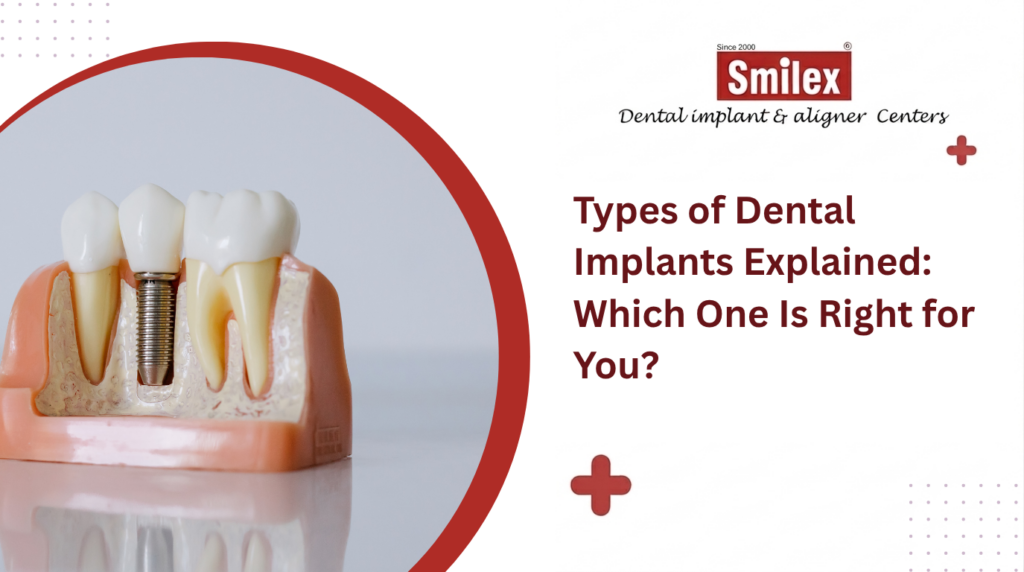
Types of Dental Implants Explained: Which One Is Right for You?

Choosing a dental implant solution depends on more than simply replacing a missing tooth. The number of missing teeth, jawbone condition, gum health, available space, and the type of restoration required can all influence which implant approach may be considered.There are different types and implant-supported solutions available, but not every option is suitable for every patient. Understanding the main categories can help you have a more informed discussion with your implant surgeon.At Smilex Dental Implant & Aligner Centers, implant treatment is planned according to each patient’s individual dental condition and tooth replacement requirements.

What Are Dental Implants?

A dental implant is a small post, commonly made from biocompatible titanium, that is placed in the jawbone to replace the root portion of a missing tooth.Once healing and integration with the surrounding bone have taken place, the implant can provide support for a dental crown, bridge, denture, or full-arch restoration, depending on the treatment plan.

The most appropriate implant solution depends on factors such as:

  • Number of missing teeth
  • Location of the missing teeth
  • Jawbone condition
  • Gum health
  • Available space
  • Type of restoration required
  • Individual treatment goals

This is why implant selection should be based on a professional clinical evaluation rather than on implant type alone.

Main Types of Dental Implants

Several implant categories and implant-supported solutions may be discussed during treatment planning. The most relevant option depends on the patient’s anatomy and restoration requirements.

1. Endosteal Dental Implants

Endosteal implants are placed directly into the jawbone and are among the most commonly used implant designs.

They are generally considered when adequate bone support is available. After the implant integrates with the surrounding bone, it can support an individual crown, bridge, or other restoration.

Common use:
Replacing one or more missing teeth when the available bone and oral conditions are suitable.

Key consideration:
The patient’s jawbone and gum health need to be evaluated before treatment.

For detailed information about the surgical stages involved in implant placement, see our dedicated dental implant procedure guide.

2. Subperiosteal Implants

Subperiosteal implants are positioned above the jawbone and underneath the gum tissue rather than being placed directly inside the bone.

They have historically been considered in situations where conventional implant placement may not be appropriate because of limited bone support. However, treatment options have evolved, and whether this approach is suitable depends on the patient’s individual anatomy and the implant surgeon’s assessment.

Common consideration:
Patients with specific bone-related limitations may require alternative treatment planning.

A consultation is necessary to determine which implant approach is clinically appropriate.

3. Mini Dental Implants

Mini dental implants are smaller in diameter than conventional implants.

Depending on the patient’s situation, they may be considered for specific applications, including stabilizing certain removable dentures. Their smaller dimensions can make them useful in selected clinical situations, but they are not automatically an alternative to conventional implants for every patient.

Common consideration:
Limited space or particular denture-stabilization requirements.

The decision should be based on the patient’s bone condition, restoration requirements, and long-term treatment goals.

4. Implant-Supported Bridges

An implant-supported bridge can be considered when several adjacent teeth are missing.

Instead of placing an individual implant for every missing tooth, strategically positioned implants can support a bridge containing multiple replacement teeth.

Common use:
Replacing several missing teeth in the same area.

The number and position of implants required depend on the patient’s dental condition and the planned restoration.

5. All-on-4 Dental Implants

All-on-4 is a full-arch implant treatment concept in which a complete arch of replacement teeth is supported by four strategically positioned implants in suitable cases.

It is different from replacing individual missing teeth with separate implants and is generally considered for patients with extensive tooth loss.

Common use:
Full-arch tooth replacement in selected patients.

Because All-on-4 is a dedicated full-arch treatment, patients interested specifically in this option should review our detailed full-mouth dental implants / All-on-4 guide.

6. All-on-6 Dental Implants

All-on-6 is another full-arch treatment approach in which a complete arch of replacement teeth is supported by six implants in appropriately selected cases.

The suitability of four versus six implants depends on factors such as bone condition, anatomy, restoration requirements, and the implant surgeon’s treatment plan.

Common use:
Full-arch restoration for patients with extensive tooth loss.

For a detailed discussion of full-arch treatment, link to the dedicated Full Mouth Dental Implants page rather than duplicating that information here.

Which Type of Dental Implant Is Right for You?

There is no single implant type that is right for every patient.

Your implant surgeon may consider:

Number of Missing Teeth

Replacing one missing tooth may require a different approach from replacing several adjacent teeth or an entire dental arch.

Jawbone Condition

The amount and quality of available bone can influence whether conventional implant placement is appropriate and whether additional treatment may be required.

Gum Health

Healthy gums and appropriate periodontal care are important considerations before and during implant treatment.

Type of Restoration

An implant may support an individual crown, bridge, removable denture, or full-arch restoration depending on the treatment plan.

Long-Term Treatment Goals

Your preferred outcome, functional requirements, oral health, and overall treatment objectives can also influence the recommended approach.

The final decision should therefore be made after a detailed clinical examination and appropriate diagnostic evaluation.

Dental Implant Types: A Simple Comparison

Implant optionCommon applicationMain consideration
Endosteal implantSingle or multiple missing teethRequires suitable bone support
Subperiosteal implantSelected cases with limited bone supportLess commonly used; case selection is important
Mini dental implantSelected applications and denture stabilizationNot suitable for every restoration
Implant-supported bridgeSeveral adjacent missing teethImplant position and restoration design matter
All-on-4Full-arch tooth replacementRequires comprehensive treatment planning
All-on-6Full-arch tooth replacementSuitability depends on anatomy and restoration requirements

This comparison provides only an overview. The appropriate treatment cannot be selected based on implant type alone.

What About Dental Implant Cost?

The cost of implant treatment can vary depending on the number of implants, implant system, restoration, jawbone condition, and any additional treatment required.

Because dental implant cost is a separate search intent, this article does not provide detailed pricing or duplicate cost tables.

For current Pune-specific pricing information, patients can visit the dedicated Dental Implant Cost in Pune page.

What About the Dental Implant Procedure?

The implant procedure involves clinical assessment, treatment planning, implant placement, healing, and restoration. However, the exact process varies between patients.

Rather than repeating a detailed surgical explanation on this page, read the dedicated Dental Implant Procedure guide for a complete patient-focused overview.

What About the Benefits of Dental Implants?

Different implant solutions can provide stable support for replacement teeth, but the benefits depend on the individual treatment and restoration.

Because benefits of dental implants is a separate topic within the Smilex content cluster, this page focuses specifically on understanding implant categories and their potential applications.

For a detailed discussion of appearance, stability, chewing function, jawbone support, and other advantages, visit our dedicated Benefits of Dental Implants guide.

How Should You Choose an Implant?

Choosing an implant should not be based only on price or the name of a particular implant type.

During your consultation, ask your implant surgeon:

  • Which implant option is suitable for my missing teeth?
  • Is there sufficient bone support?
  • What type of restoration will the implant support?
  • Are there alternative treatment options?
  • Will additional procedures be required?
  • What type of maintenance will be needed?
  • What factors could affect the long-term outcome?

These questions can help you understand why a particular treatment has been recommended for your individual situation.

Dental Implant Types at Smilex

At Smilex Dental Implant & Aligner Centers, implant treatment is planned according to the patient’s individual clinical requirements.

Dr. Vijay Deshmukh – Chief Implant Surgeon

Dr. Vijay Deshmukh, M.D.S., is the Chief Implant Surgeon at Smilex Dental Implant & Aligner Centers. He has 32 years of experience and a super-speciality focus on All-on-4 and All-on-6 dental implants.

Patients considering implant treatment can undergo an appropriate evaluation to determine which tooth replacement approach may be suitable for their condition.

Smilex Dental Implant & Aligner Centers
Dr. Vijay Deshmukh
M.D.S. / Chief Implant Surgeon
Super-Speciality – All-on-4 & All-on-6 Dental Implants
32 Years of Experience
Pune
Phone: +91 97654 07660

Dental Implants in Pune

If you are searching for dental implants in Pune, it is important to choose treatment based on your individual dental condition rather than selecting an implant type solely from online information.

A professional evaluation can help determine the appropriate implant design, restoration, and treatment approach for your needs.

For patients specifically looking for implant treatment in Pune, visit the dedicated Dental Implants in Pune service page.

Frequently Asked Questions

What are the main types of dental implants?

Common implant categories include endosteal implants, subperiosteal implants, and mini dental implants. Implant-supported bridges and full-arch approaches such as All-on-4 and All-on-6 are also used for specific tooth replacement situations.

Which dental implant type is most common?

Endosteal implants are among the most commonly used implant designs. They are placed directly into the jawbone and can support different types of dental restorations when clinically appropriate.

Are mini dental implants suitable for everyone?

No. Mini dental implants are used in selected situations and may be considered for applications such as denture stabilization. An implant surgeon needs to assess the patient’s bone, restoration requirements, and overall oral condition.

What is the difference between All-on-4 and All-on-6?

Both are full-arch implant treatment approaches. All-on-4 uses four strategically positioned implants to support a full arch in suitable cases, while All-on-6 uses six implants. The appropriate approach depends on the patient’s anatomy and treatment requirements.

How do I know which dental implant is right for me?

The appropriate implant option depends on factors such as the number of missing teeth, jawbone condition, gum health, restoration requirements, and individual treatment goals. A professional implant evaluation is necessary before selecting a treatment.

Does implant type affect dental implant cost?

Yes. Treatment cost can vary depending on the implant system, number of implants, restoration, clinical complexity, and additional procedures that may be required. Detailed pricing should be discussed during a personalized consultation.

Conclusion

Different types of dental implants and implant-supported solutions are designed for different tooth replacement situations. Endosteal implants may be suitable for conventional tooth replacement, while implant-supported bridges, mini implants, All-on-4, and All-on-6 may be considered for specific clinical requirements.The right choice depends on your individual dental condition, not simply on the implant category or price.If you are considering dental implants, consult an experienced implant surgeon for a personalized evaluation and treatment plan.

Find the clinic here: Get direction

Call Now: +91 97654 07660

Address: 3rd Floor, Rahul Capital, Prabhat Road, Erandwane, Pune, Maharashtra 411004


Tooth Sensitivity: Causes, Treatments, and Prevention

Tooth sensitivity can turn everyday moments like sipping hot coffee or enjoying ice cream into sharp, uncomfortable experiences. This common dental problem occurs when the protective layers of your teeth wear down, leaving nerve endings exposed. The result? Pain that feels sudden, frustrating, and hard to ignore. Left untreated, tooth sensitivity can worsen, affecting not just your comfort but also your overall oral health. In this blog, we’ll break down the causes, explore proven treatments, and share prevention strategies to help you protect your smile and enjoy life pain-free.

What Is Tooth Sensitivity and Why Does It Happen?

Tooth sensitivity is a sharp, sudden discomfort felt when teeth are exposed to hot, cold, sweet, or acidic foods and drinks. It happens when the protective enamel or gum tissue wears away, exposing the inner dentin layer that connects to nerves. This direct pathway to the nerves is what makes sensitivity so painful and why it shouldn’t be ignored.

Early Signs and Symptoms You Shouldn’t Ignore

Many people dismiss sensitivity as temporary irritation, but it can signal underlying issues. Warning signs include:

  • Discomfort when brushing or flossing
  • Pain while drinking hot coffee or cold water
  • Sensitivity to sugary or acidic foods
  • Lingering pain after exposure to temperature changes

Catching these early helps prevent minor sensitivity from escalating into more complex dental problems.

Top Causes of Tooth Sensitivity Explained

Several everyday factors can damage enamel or expose dentin:

  • Aggressive brushing: Using stiff bristles or too much force can wear down enamel.
  • Gum recession: Often caused by gum disease, recession leaves roots vulnerable.
  • Tooth decay and cavities: Exposed dentin from decay increases sensitivity.
  • Teeth grinding (bruxism): Constant grinding of thin enamel.
  • Dental treatments: Whitening, fillings, or crowns may trigger temporary sensitivity.

Understanding these causes makes it easier to identify your personal triggers.

How Enamel Erosion Triggers Tooth Pain

Enamel is the hardest substance in the human body, but it isn’t indestructible. Acidic foods, soft drinks, and even stomach acid from reflux can erode enamel over time. Once enamel thins, the dentin layer is exposed, and every sip of soda or spoonful of ice cream sends pain signals straight to the nerves. Unlike bone, enamel can’t regenerate—making prevention and protection crucial.

Everyday Habits That Make Sensitive Teeth Worse

Small habits can magnify sensitivity:

  • Frequent snacking on sugary treats
  • Clenching your jaw under stress
  • Using whitening toothpaste too often
  • Ignoring regular dental checkups

Breaking these habits can dramatically reduce discomfort and protect teeth from long-term damage.

Professional Treatments for Tooth Sensitivity Relief

If sensitivity interferes with daily life, a dentist can help with targeted treatments such as:

  • Fluoride varnishes: Strengthen enamel and reduce pain.
  • Desensitizing gels: Block nerve signals.
  • Dental bonding: Covers exposed root surfaces.
  • Gum grafts: Restore protective tissue where gums have receded.
  • Root canal therapy: In severe cases, it eliminates sensitivity by treating the tooth nerve directly.

These professional solutions are tailored based on the root cause of your sensitivity.

Best At-Home Remedies for Sensitive Teeth

For milder cases, at-home care can provide relief:

  • Switch to desensitizing toothpaste that blocks pain signals.
  • Use a soft-bristle toothbrush to prevent enamel wear.
  • Rinse with fluoride mouthwash to strengthen tooth surfaces.
  • Avoid overly hot, cold, or acidic foods.
  • Practice good hydration to support saliva flow, which naturally protects teeth.

Consistency is key—most remedies take a few weeks to show noticeable improvement.

How to Prevent Tooth Sensitivity Before It Starts

The best cure is prevention. Adopt these habits to protect your enamel and gums:

  • Brush twice daily with fluoride toothpaste.
  • Limit acidic beverages like sodas and fruit juices.
  • Wear a mouthguard if you grind your teeth at night.
  • Get professional cleanings at least twice a year.
  • Don’t skip flossing—healthy gums protect roots from exposure.

When to See a Dentist About Sensitive Teeth

Occasional sensitivity might not be a red flag, but persistent or worsening pain is. Seek dental advice if:

  • Sensitivity lasts longer than a few weeks.
  • Pain occurs even without triggers.
  • You notice gum recession or visible cavities.

A professional exam helps identify whether sensitivity is due to minor wear, decay, or a more serious dental issue.

Long-Term Oral Care Tips for a Pain-Free Smile

Tooth sensitivity doesn’t have to be a lifelong problem. With proper oral hygiene, mindful eating habits, and regular dental checkups, you can protect your enamel and gums for years to come. Remember, prevention is always easier—and cheaper—than treatment. Taking action today means enjoying your favorite foods and drinks tomorrow without the sharp sting of pain.

Find the clinic here: Get direction

Call Now: +91 97654 07660

Address: 3rd Floor, Rahul Capital, Prabhat Road, Erandwane, Pune, Maharashtra 411004


Are Bridges Better Than Implants? A Dentist’s Honest Comparison

Are Bridges Better Than Implants? If you’re missing a tooth, that question has probably crossed your mind more than once. Both dental bridges and implants can restore your smile, but choosing the wrong option may lead to extra costs, discomfort, or long-term complications. Many patients feel overwhelmed by conflicting advice online, unsure whether durability, price, or comfort should matter most. That’s where this guide helps. In this blog, we’ll break down the differences between dental bridges and implants, share what dentists consider before recommending each, and provide insights on factors like tooth implant cost, so you can make a confident, well-informed decision for your smile.

What Is a Dental Bridge?

A dental implant is a titanium post surgically placed into the jawbone to act as an artificial tooth root. Once it fuses with the bone, a custom-made crown is attached, restoring a natural look and full chewing function. Dental implants are a long-lasting and reliable solution for missing teeth, and many patients often inquire about the dental implants cost per tooth to better plan their treatment and budget. Choosing a trusted dental clinic in Deccan Pune ensures precise implant placement, advanced technology, and long-term success of the treatment.

Key benefit: Quick, cost-effective solution for one or two missing teeth.

Main drawback: It requires reducing healthy teeth and may not last as long as implants.

What Is a Dental Implant?

A dental implant is a titanium post surgically placed into the jawbone to act as an artificial tooth root. Once it fuses with bone, a crown is attached for a natural look and function.

Key benefit: Preserves jawbone health and feels like a real tooth.

Main drawback: Higher upfront cost and requires a surgical procedure.

Cost Comparison: Bridges vs Implants

One of the first questions patients ask is about cost. Dental bridges generally cost less up front. While initially more expensive, implants may be more cost-effective because they last for decades without frequent replacement.

Bridge lifespan: 8–12 years (with good care)

Implant lifespan: 20+ years, often a lifetime

Durability and Longevity: Which Lasts Longer?

If your priority is long-term stability, implants usually win. Unlike bridges, they don’t rely on other teeth and help maintain bone density. Bridges may weaken or decay, supporting teeth over time, requiring replacement sooner.

Comfort and Function: Which Feels More Natural?

Implants closely mimic natural teeth in both look and feel, making them a popular choice for patients searching for dental implants near me. They allow you to chew confidently without worrying about slipping or shifting. While dental bridges also restore function, they may not feel quite as natural—especially when multiple teeth are involved—and can sometimes lack the stability and comfort offered by dental implants.

Oral Health Impact: Which Protects Your Teeth and Gums?

Bridges: Require trimming down adjacent healthy teeth, which can increase future risk of decay.

Implants: Stand alone and preserve surrounding teeth while preventing bone loss in the jaw.

Bridges may be practical for patients with strong supporting teeth but insufficient bone. However, implants are generally recommended for long-term gum and bone health.

Aesthetics: Which Looks More Like a Natural Smile?

Both options can blend well with natural teeth. However, implants typically provide superior aesthetics because they emerge from the gums like natural teeth. Bridges can look natural, too, but gum recession over time may expose metal edges.

Healing and Recovery: What to Expect

Bridges: Typically completed in 2–3 dental visits with no surgery. Recovery is quick.

Implants: Involve surgery and healing time (3–6 months for osseointegration). While longer, the result is more permanent.

Who Is the Right Candidate for Each?

Best for bridges: Patients missing one or two teeth, with healthy supporting teeth, and who prefer a quicker, less expensive solution.

Best for implants are patients with healthy gums, good jawbone density, and a willingness to invest in long-term results.

Your dentist will evaluate bone structure, oral health, and lifestyle factors before recommending the best treatment.

Final Verdict: Are Bridges Better Than Implants?

The answer isn’t one-size-fits-all. Dental bridges are often the right choice for patients seeking an affordable, non-surgical fix. Dental implants are better suited for those prioritizing longevity, jawbone health, and a natural feel.

Think of it this way:

Short-term, budget-friendly fix? A bridge may work.

Long-term, permanent solution? An implant is worth it.

Takeaway

Regarding tooth replacement, the debate on “Are bridges better than implants?” concerns your specific needs. Both options can restore your smile, but the best choice balances cost, comfort, and long-term health. Always consult a qualified dentist who can assess your case and guide you toward the proper treatment.

Find the clinic here: Get direction

Call Now: +91 97654 07660

Address: 3rd Floor, Rahul Capital, Prabhat Road, Erandwane, Pune, Maharashtra 411004

icon
icon