
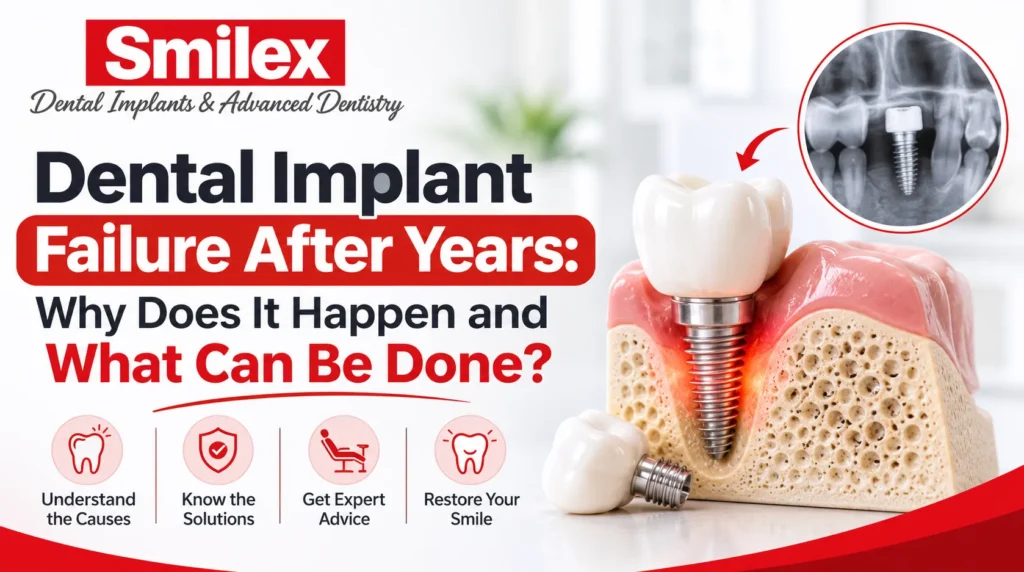
Dental implants are designed to replace missing teeth and can function for many years with proper care. However, complications may sometimes develop even after years of successful use. Dental Implant in Pune is a concern for patients experiencing implant pain, gum swelling, infection or unexpected movement around an implant.A dental implant may develop problems because of gum infection, bone loss, excessive biting pressure, poor oral hygiene or mechanical damage. Recognising the warning signs early can help prevent further complications and protect surrounding oral structures.At Smilex International Dental Centre, Dr. Vijay Deshmukh, M.D.S., Chief Implant Surgeon, provides dental implant evaluation and treatment planning based on individual clinical findings.
Can a Dental Implant Fail After Several Years?
Yes. Although dental implants are intended for long-term tooth replacement, they are not completely immune to complications.
Implant failure can be classified into two categories:
- Early implant failure: Occurs when the implant does not integrate properly with the surrounding jawbone during the initial healing period.
- Late implant failure: Develops after successful healing and may involve infection, progressive bone loss, excessive mechanical forces or other complications.
Patients searching for Dental Implant Problems After 10 Years should understand that an implant can develop biological or mechanical issues even after functioning normally for a long time.
Common Signs of Dental Implant Failure
Recognising the Signs of Dental Implant Failure helps patients seek timely professional assessment.
Common warning signs include:
- Persistent pain or discomfort around the implant.
- Swelling or redness in the surrounding gums.
- Bleeding during brushing.
- Pus or discharge near the implant.
- Movement of the implant or dental crown.
- Difficulty chewing comfortably.
- Gum recession around the implant.
A Loose Dental Implant requires prompt evaluation. However, a loose crown does not necessarily mean the implant itself has failed. The crown, connecting abutment or screw may have a mechanical problem while the implant remains stable.
Why Does Dental Implant Failure Happen After Years?
Several biological and mechanical factors can contribute to late implant complications.
1. Peri-Implantitis and Gum Infection
An inflammatory disorder called peri-implantitis affects the tissues around a dental implant. It may involve gum inflammation, infection and progressive loss of supporting bone.
Without appropriate management, it can compromise implant stability. Early diagnosis and suitable Peri-Implantitis Treatment in Pune can help manage the condition and reduce further damage.
2. Bone Loss Around Dental Implants
A strong supporting jawbone is essential for dental implants. Progressive bone loss may occur because of infection, inflammation or excessive mechanical forces.
3. Poor Oral Hygiene
Food particles and bacterial plaque can accumulate around implants. Inadequate cleaning increases the risk of gum inflammation and peri-implant disease.
4. Excessive Bite Pressure or Teeth Grinding
Dental implants may be exposed to undue pressure from clenching and grinding. Over time, this may contribute to crown damage, screw loosening or other mechanical complications.
5. Smoking and Other Health Factors
Smoking can negatively affect gum health and healing. Uncontrolled medical conditions, certain medications and individual health factors may also influence implant maintenance and recovery.
6. Crown, Abutment or Implant Component Problems
Not every implant complication represents actual implant failure. A damaged crown, loose abutment or fractured connecting screw may cause discomfort or movement.Identifying the affected component is important before deciding on treatment.
What Should You Do If Your Dental Implant Fails?
If you experience Dental Implant Pain After Years, swelling, pus or implant mobility, do not ignore these symptoms or attempt to tighten the implant yourself.
A dental evaluation may include:
- Clinical evaluation of the gums surrounding the implant.
- Dental X-rays or 3D imaging when required.
- Assessment of supporting bone levels.
- Evaluation of implant stability.
- Identification of infection or mechanical complications.
The findings help determine whether the problem involves the implant itself or its restorative components.
Treatment Options for a Failed Dental Implant
Failed Dental Implant Treatment in Pune depends on the underlying cause and the amount of remaining supporting bone.
Possible treatment approaches include:
- Professional cleaning and implant maintenance.
- Treatment of peri-implant inflammation.
- Management of infection.
- Surgical treatment where clinically appropriate.
- Implant removal and possible replacement when necessary.
- Bone grafting if additional bone support is required.
Importantly, not every failed implant requires removal. If the implant remains stable and the complication is limited to the crown, abutment or surrounding soft tissues, less invasive treatment may be possible.
Dental Implant Failure Treatment in Erandwane, Pune
Patients experiencing implant pain, looseness, swelling or infection can explore a consultation at Smilex International Dental Centre, a Dental Implant Clinic in Erandwane.Dr. Vijay Deshmukh, M.D.S., Chief Implant Surgeon, evaluates implant-related concerns and helps determine suitable treatment options based on clinical findings.Whether you have an older implant showing signs of infection or a restoration that has become loose, an individual assessment is important before planning further treatment.
Dental Implant Failure Treatment on Prabhat Road, Pune
Patients searching for a Dental Implant Clinic on Prabhat Road can consider Smilex International Dental Centre at 3rd Floor, Rahul Capital, Prabhat Road, Erandwane, Pune, Maharashtra – 411004.A proper assessment helps establish whether implant mobility, gum inflammation, bone loss or a damaged prosthetic component is responsible for the problem.Before considering Dental Implant Replacement in Pune, implant stability, gum health and supporting bone must be carefully evaluated.
How Can You Prevent Dental Implant Failure in the Future?
The risk of future problems can be decreased with proper care.
- Brush twice daily using a soft-bristled toothbrush.
- Clean around implants with appropriate interdental brushes or other recommended tools.
- Attend regular dental check-ups.
- Avoid smoking.
- Seek treatment for teeth grinding if present.
- Follow professional implant maintenance recommendations.
- Report pain, bleeding, swelling or unusual movement early.
Consistent oral hygiene and professional monitoring are important even when your implant feels completely normal.
Why Consider Smilex International Dental Centre for Dental Implant Consultation?
Smilex International Dental Centre offers dental implant evaluation and individualised treatment planning in Pune.Dr. Vijay Deshmukh, M.D.S., Chief Implant Surgeon, assesses implant-related concerns and helps patients understand available restorative and surgical treatment options.Patients can discuss existing implant complications, explore suitable treatment approaches and understand whether repair, maintenance or replacement may be appropriate.The clinic is conveniently located at Prabhat Road, Erandwane, Pune. Patients can contact the centre to enquire about a dental implant consultation.
Conclusion
Dental Implant Failure After Years can result from peri-implantitis, bone loss, inadequate oral hygiene, excessive bite pressure or mechanical complications. Symptoms such as persistent pain, bleeding gums, pus and implant mobility should never be ignored.For patients concerned about Dental Implant Failure in Pune, timely evaluation can help identify the cause and determine appropriate treatment. Whether you are in Erandwane or near Prabhat Road, Smilex International Dental Centre provides an opportunity to discuss your implant concerns with Dr. Vijay Deshmukh, Chief Implant Surgeon.
Frequently Asked Questions (FAQs)
1. Can a dental implant fail after 10 years?
Yes. A dental implant can develop complications even after 10 years of successful function. Peri-implantitis, bone loss, excessive biting pressure and mechanical problems may affect its long-term stability. Regular dental examinations help identify these issues.
2. What are the early signs of dental implant failure?
Early warning signs include persistent pain, gum redness, swelling, bleeding, pus discharge and unusual implant movement. A loose crown may indicate a restorative problem rather than implant failure. Professional examination is necessary to identify the cause.
3. Can a failed dental implant be repaired without removing it?
Yes, depending on the cause. Some complications can be managed through professional cleaning, infection control or crown and abutment repair. However, an implant with severe bone loss or significant mobility may require removal.
4. What causes pain around a dental implant after several years?
Pain around an older implant may result from peri-implantitis, gum infection, bone loss, excessive biting pressure or a damaged crown or connecting component. Persistent pain requires dental evaluation to determine the underlying problem.
5. Can a failed dental implant be replaced with a new one?
In some cases, a failed implant can be replaced. However, the surrounding bone and gum tissues must first be evaluated. Infection management, healing time and bone grafting may be necessary before another implant can be considered. Replacement suitability depends on individual clinical findings.
Find the clinic here: Get direction
Call Now: +91 97654 07660
Address: 3rd Floor, Rahul Capital, Prabhat Road, Erandwane, Pune, Maharashtra 411004
Disclaimer: AI-generated content, reviewed and edited by a Dentist