





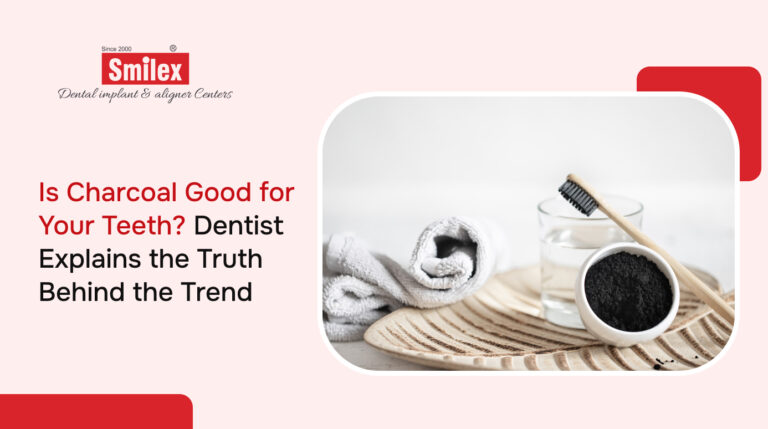
Is Charcoal Good for Your Teeth? Dentist Explains the Truth Behind the Trend
Smilex Implants & Aligners Center
Prabhat Rd, Erandwane, Pune
In recent years, charcoal toothpaste and activated charcoal powders have exploded in popularity. Promoted as a “natural whitening” and detox solution, many people wonder: Is charcoal good for your teeth? In this blog, we’ll dive into what science says, potential risks, and when (if ever) charcoal might have a safe role in your oral hygiene.
What Is Charcoal in Dental Products?
- Activated charcoal is carbon processed to have many tiny pores, increasing its surface area.
- It can adsorb (bind) stains, toxins, or “impurities” on tooth enamel.
- You’ll find charcoal in:
- Powders (loose or in jars)
- Charcoal-infused toothpastes
- Charcoal mouthwashes or rinses
However, just because something is “black and trendy” doesn’t mean it’s safe or effective for your teeth.
What the Research Says: Pros & Cons
Possible Benefits
1. Surface stain removal (mild)
Some users report that charcoal helps lift surface stains (from coffee, tea, smoking). Because it’s somewhat abrasive, it might polish the enamel superficially.
2. Marketing appeal/placebo effect
The visual of black foam or charcoal “pulling out impurities” is psychologically satisfying.
Risks & Downsides (Important to Know)
1. Abrasiveness/enamel erosion
Many charcoal products are more abrasive than standard fluoride toothpaste. Over time, this can wear down enamel, making teeth more sensitive and prone to decay.
2. Lack of fluoride
Many charcoal products don’t contain fluoride — a key ingredient for protecting teeth from decay and strengthening enamel.
3. No strong clinical evidence for whitening
High-quality clinical trials are scarce. The whitening effect is often modest and temporary.
4. Uneven results & grit
Charcoal may produce uneven color (patchy whitening) or leave black residue in cracks or under gums, causing aesthetic complaints.
5. Gum irritation
Abrasive particles may irritate gums, especially in people with gum recession or sensitive tissues.
6. Masking underlying problems
If you’re using charcoal to mask yellowing from decay or enamel thinning, it doesn’t treat the cause — and might delay real treatment.
So, Is Charcoal Good for Your Teeth?
In short:
Not generally recommended as a daily toothpaste
Due to the risks of abrasion, lack of fluoride, and uncertain benefits, most dentists won’t recommend charcoal toothpaste for everyday use.
Occasional/cautious use (if at all)
If someone wants to try charcoal, using it very sparingly (e.g. once a week) with a gentle formula might reduce risks. But it should never replace a regular, fluoride toothpaste.
Better alternatives exist
Professional whitening treatments, offer safer and more predictable results.
When Charcoal Use May Be Safer / Less Risky
If someone insists on using charcoal, these precautions help reduce damage:
| Best Practice | Explanation |
| Use low-abrasivity charcoal | Choose products with an abrasive rating (RDA) comparable to or less than standard toothpaste |
| Use a soft toothbrush | Avoid stiff bristles that can accelerate enamel wear |
| Limit frequency | Use charcoal at most 1 time per week, never daily |
| Mix with fluoride toothpaste | Brush with your regular fluoride toothpaste afterward to maintain enamel protection |
| Monitor for sensitivity | Stop if you feel discomfort, increased sensitivity, or gum irritation |
| Get dental checkups | Let a dentist assess enamel health, gum recession, and recommend safer whitening options |
Safer, More Effective Whitening Alternatives
Here are some alternatives we often recommend:
- Professional teeth cleaning / scaling & polishing
- Removes stubborn surface stains and plaque buildup—one of the safest first steps.
- Removes stubborn surface stains and plaque buildup—one of the safest first steps.
- In-office whitening/laser whitening
- Supervised bleaching treatments with stronger but controlled agents. Safer for enamel and gums.
- Supervised bleaching treatments with stronger but controlled agents. Safer for enamel and gums.
- Take-home whitening kits (with dentist supervision)
- Bleaching trays and gels you use at home are designed by your dentist to minimize sensitivity and improve results.
- Bleaching trays and gels you use at home are designed by your dentist to minimize sensitivity and improve results.
- Whitening toothpastes (non-abrasive, fluoride-containing)
- These contain mild bleaching agents (e.g. hydrogen peroxide) and silica rather than charcoal dust.
- These contain mild bleaching agents (e.g. hydrogen peroxide) and silica rather than charcoal dust.
- Enamel remineralization & protective treatments
- Fluoride varnishes, remineralizing pastes, and protective coatings help resist stains in the future.
How to Frame This Strategy (For Patients)
When you consult with us at Smilex, here’s how we typically advise patients:
- First, assess oral health — enamel thickness, gum health, and past restorations.
- If whitening is safe, we propose a gentle, customized plan (in-office or supervised home kit).
- We educate you on daily habits (diet, smoking, coffee/tea) that contribute to staining.
- We monitor progress, sensitivity, and appearance — adjusting as needed.
Conclusion
So, is charcoal good for your teeth? While the idea is tempting, the risks — enamel wear, lack of fluoride, gum irritation — outweigh the uncertain benefits in most cases. Charcoal might lead to more problems in the long run.If you’re unsure whether charcoal is right for you, consult a qualified dentist in Karve Road Pune. At Smilex, the best dental clinic on Karve Road, we help you choose safer, long-term solutions for a healthier, brighter smile.
Frequently Asked Questions (FAQs)
1. Is charcoal toothpaste safe for daily use?
Charcoal toothpaste is generally not recommended for daily use because it can be abrasive and may wear down tooth enamel over time. Most dentists advise using fluoride toothpaste instead for everyday oral care.
2. Does activated charcoal really whiten teeth?
Activated charcoal may help remove surface stains, but it does not provide deep whitening. The results are often temporary and less effective compared to professional teeth whitening treatments.
3. Can charcoal damage your teeth?
Yes, excessive use of charcoal can damage enamel, leading to increased sensitivity, discoloration, and a higher risk of cavities due to enamel erosion.
4. Why do dentists not recommend charcoal toothpaste?
Dentists often avoid recommending charcoal toothpaste because:
- It lacks fluoride, which protects against cavities
- It can be too abrasive for enamel
- There is limited scientific evidence supporting its long-term safety and effectiveness
5. Is charcoal better than regular toothpaste?
No, charcoal is not better than regular toothpaste. Fluoride toothpaste is clinically proven to strengthen enamel, prevent decay, and maintain overall oral health.
6. How often can I use charcoal on my teeth safely?
If you choose to use charcoal, limit it to once a week or less. Always follow up with a fluoride toothpaste to help protect your enamel.
7. Are there safer alternatives to charcoal for teeth whitening?
Yes, safer alternatives include:
- Professional dental cleaning
- In-office whitening treatments
- Dentist-prescribed take-home whitening kits
- Fluoride-based whitening toothpastes
These options are more effective and safer for long-term use.
8. Can charcoal toothpaste cause tooth sensitivity?
Yes, due to its abrasive nature, charcoal toothpaste can increase tooth sensitivity, especially if you already have thin enamel or gum recession.
Find the clinic here: Get direction
Call Now: +91 97654 07660
Address: 3rd Floor, Rahul Capital, Prabhat Rd, Erandwane, Pune, Maharashtra 411004


